
Field notes on strategy, design & AI.
Practical, opinionated writing on how software actually gets designed and built, and where AI fits into the work.

The Most Valuable Design Skill in 2027 Will Not Be Figma
When anyone can generate thirty interfaces, producing another one stops being a distinction. The value moves to judgment: knowing which interface should exist, and whether one is needed at all.
Read the essay →
I Think the Traditional UX Process Is Dying. And I'm a UX Leader.
Discovery, wireframes, design, handoff. The sequence made sense when building was expensive. A case for a different rhythm: question, working prototype, user feedback, production — with research throughout.
Read the essay →
I Design and Build With AI. I Don't Ship Slop.
AI can generate an interface in seconds. That doesn't mean it designed a product. On hierarchy, craft, and why the bar goes up — not down — when everybody can ship.
Read the essay →
Christian Higher Education Doesn't Need to Abandon Its Mission to Survive. It Needs to Prove Its Value.
The institutions that thrive in the next era of education will be those that can preserve what makes them distinctive while becoming dramatically better at understanding students, demonstrating outcomes, and responding to change.
Read the essay →
Higher Education Has a Data Problem. But It Isn't a Lack of Data.
The next generation of learning technology won't simply tell institutions what happened. It will help them understand what is happening — and what is likely to happen next.
Read the essay →
If We Can't See What's Happening, We Can't Change It
The next generation of higher education technology won't be defined by how much data it collects. It will be defined by how clearly it helps people understand what matters.
Read the essay →
The Economics of Knowing Earlier: Why Predictive Learning Could Change the Financial Future of Higher Education
Universities have spent decades measuring what happened. In an increasingly difficult economic environment, the institutions that thrive may be the ones that can see what is happening early enough to change the outcome.
Read the essay →
The Most Important Signal a University Receives May Be the One It Sees Before Something Goes Wrong
After decades of working with leaders and organizations, I've learned that transformation rarely begins with technology. It begins when the right people can finally see what is actually happening.
Read the essay →
Intelligence Positive
Every transformative technology arrives with a warning. Choosing curiosity over fear — why the real question isn't what AI takes away, but what humanity becomes when intelligent tools amplify human potential.
Read the essay →
AI Doesn't Replace Software Architecture — It Exposes It
It's tempting to believe AI reduces the importance of architecture. The opposite is true. AI operates inside the systems you've already built — if they're healthy, intelligence compounds; if they aren't, complexity does.
Read the essay →
AI Technical Debt Is Worse Than Software Technical Debt
Classic technical debt leaves clues — duplicate code, outdated libraries. AI debt hides outside the source code entirely, in prompts, models, embeddings, and evaluations, compounding faster and reversing harder.
Read the essay →
Building AI Products That Companies Can Actually Trust
The technology is moving at breathtaking speed. Trust isn't. Why production AI is a software-engineering problem — guardrails, observability, evaluation, and governance — not a bigger-model problem.
Read the essay →
Designing Software That Learns Without Losing Control
The most successful AI systems aren't fully autonomous — they're carefully orchestrated. Why the future belongs to software that combines adaptive intelligence with deterministic business logic, and knows exactly when to use each.
Read the essay →
Every Company Needs an AI Layer
Every major shift in software eventually becomes infrastructure — websites, cloud, authentication, search. AI is heading down the same road. The advantage won't go to the flashiest features, but to the companies that build AI into the fabric of their business.
Read the essay →
Every Developer Is Becoming a Systems Designer
The conversation asks whether AI will replace developers. That's the wrong question. The center of gravity is shifting from writing every line of logic to orchestrating models, services, data, and human judgment into reliable systems.
Read the essay →
From CRUD to Cognitive Applications
For forty years enterprise software revolved around four operations: create, read, update, delete. The application stored data; humans did the thinking. AI is changing that relationship — software that understands, reasons, and collaborates.
Read the essay →
Retrieval Is the New Database Query
Every generation of engineering has a defining abstraction. SQL let us ask questions declaratively. Retrieval-Augmented Generation is becoming the next one — changing the kinds of questions software can answer.
Read the essay →
The Enterprise AI Stack Explained
A production AI application isn't an API call to an LLM — it's an ecosystem. Models, embeddings, vector databases, orchestration, MCP, evaluation, guardrails, and the infrastructure that turns AI into production software.
Read the essay →
The Future CTO Manages Intelligence, Not Infrastructure
For decades the CTO role was defined by infrastructure — servers, networks, uptime. That's becoming table stakes. The future CTO spends their time deciding how intelligence flows through the business.
Read the essay →
Why AI Agents Need Systems, Not Prompts
Prompt engineering taught us how models behave — but prompts aren't products. What separates a clever chatbot from software people depend on is memory, retrieval, tools, guardrails, evaluation, and orchestration.
Read the essay →
Bespoke SaaS: Every Business Deserves Software Built Specifically for It
Businesses buy software built for millions and spend years bending it to fit one organization. AI changes the economics: you can now build software designed exclusively around your business — and own it, instead of renting a compromise forever.
Read the essay →
Enterprise Design Does Not Have to Feel Corporate
Somewhere over two decades, organizations quietly began translating professional into personality-free. Why professionalism and humanity aren't opposites — and how warmth, distinction, and scale can coexist.
Read the essay →
The Most Expensive Design Debt Is Inconsistency
Design debt accumulates quietly — one reasonable exception at a time — until customers call the product confusing and teams slow to a crawl. Why inconsistency is an organizational cost, not just a design one.
Read the essay →
The Agency of the Future Will Be Smaller, Faster, and More Senior
Agencies once competed on headcount. AI changed the economics: a handful of experienced practitioners can now do what once took dozens. Why fewer people with greater judgment win.
Read the essay →
AI Can Generate a Brand. It Cannot Protect One
Anyone can now generate a polished visual identity in minutes. Why creating branded assets got easier while protecting the brand they represent got harder — and why stewardship wins.
Read the essay →
AI Makes Art Direction More Important, Not Less
When one person can generate hundreds of polished images before lunch, beauty stops being the differentiator. The value shifts toward deciding which images belong together — and building a coherent visual world.
Read the essay →
AI Transformation Is Really Organizational Transformation
Buy the platform, run the workshops, add the chatbot — and six months later, why so little changed. AI is added to yesterday's operating model instead of reshaping tomorrow's.
Read the essay →
The Best Agency Relationships Feel Like Shared Ownership
A vendor asks 'is that in scope?' A partner asks 'how do we solve this together?' Why the best agency relationships share the weight of uncertainty — and the outcome.
Read the essay →
Brand Lives in the Product, Not Just the Marketing Site
The marketing site promises one experience; the product delivers another. Why the application must express the same character as the campaign that sold it — because the product is the brand.
Read the essay →
A CMS Should Give Designers Freedom Without Creating Chaos
Designers want consistency, authors want flexibility, leadership wants speed. How flexible component systems for Sitecore and Optimizely satisfy all of them at once.
Read the essay →
Design Systems Are How Craft Survives Scale
Design systems aren't really about efficiency. They exist to protect craft as organizations grow — so thoughtful decisions outlive the designer who first made them.
Read the essay →
Designing Components That Content Authors Cannot Break
The design work doesn't end when the interface is approved — it ends when hundreds of content authors start publishing into it. Why thoughtful constraints are what protect quality inside enterprise CMS platforms.
Read the essay →
Digital Transformation Should Reduce Organizational Drag
Ask ten executives what digital transformation means and you'll hear ten technologies — and no outcomes. The real objective is less friction between intention and execution.
Read the essay →
Enterprise Websites Fail When No One Owns the Whole Experience
Every department does its job well — and the website still gets worse, one disconnected decision at a time. Why fragmented governance creates fragmented customer journeys.
Read the essay →
How to Know Whether Your Company Is Actually Ready for AI
Buying intelligent tools doesn't make an organization intelligent. An eight-part readiness framework — purpose, data, security, governance, skills, value, integration, outcomes.
Read the essay →
A New CMS Cannot Fix an Old Operating Model
The website launches, everyone celebrates — then the old problems return. Why platform modernization only works when governance, roles, workflows, and accountability modernize too.
Read the essay →
Stop Migrating Content No One Needs
Most CMS migrations quietly carry years of clutter into a beautiful new platform. Why the best migrations begin with subtraction — auditing legacy content and cutting the ROT.
Read the essay →
The Template Is Not the Experience
Enterprise sites still get scoped as a count of page templates. But customers don't experience templates — they experience moments. Why the future belongs to adaptable systems, not pages designed one at a time.
Read the essay →
What AI Should Do Before It Ever Talks to a Customer
Every organization wants a chatbot. But the highest-value AI often works where customers never see it — research, content ops, employee knowledge, QA, and decision support.
Read the essay →
Why So Many AI Products Look Exactly the Same
Dark backgrounds, blue gradients, glowing orbs, identical dashboards. Why AI products have become visually indistinguishable — and why a clear point of view is the only way out.
Read the essay →
Your CMS Is Not Your Digital Strategy
Sitecore, Optimizely, Adobe — the platform is never the problem. Why a CMS is infrastructure, digital strategy is direction, and only the second one decides if you're building the right thing.
Read the essay →
The Best Digital Experiences Feel Obvious in Hindsight
Great experiences make you think 'of course it works this way.' Why that feeling of obviousness is the result of dozens of hard decisions — and why simplicity is so hard to design.
Read the essay →
The Difference Between Building Features and Building Momentum
Launch isn't the finish line — it's the starting line. Why the products that win aren't the ones with the longest feature list, but the ones that keep getting better after launch.
Read the essay →
The Cost of Designing the Wrong Thing Perfectly
A poorly built product is easy to diagnose. A beautifully built product aimed at the wrong problem is far more dangerous — because excellence makes a bad decision look sound.
Read the essay →
Designing Products That Feel Expensive
Premium isn't a gold gradient or a price tag — it's something people feel within moments. What actually creates the perception of a premium digital experience: intentionality.
Read the essay →
Designing With Less Takes More Skill
Minimalism isn't a style — it's a discipline. When every element has to earn its place, you can't hide behind decoration. Why restraint is the hardest thing to design well.
Read the essay →
The Details Users Never Notice Are the Ones They Feel
Nobody compliments your spacing or your easing curve. But remove them and a product feels broken. Why micro-interactions, spacing, rhythm, and hierarchy carry the experience.
Read the essay →
Every Great Product Starts With a Better Question
Great products don't begin with great ideas — ideas are plentiful. They begin with great questions. Why discovery isn't the phase before the work; discovery is the work.
Read the essay →
Every Pixel Is a Decision
Visual design isn't the art of making things beautiful. It's the discipline of making intentional choices — thousands of them, until every pixel has earned its place.
Read the essay →
From Business Goals to User Outcomes
No customer wakes up hoping to improve your conversion rate. Why every KPI is really a measurement of human behavior — and how connecting the two changes strategy.
Read the essay →
Motion Should Guide, Not Distract
Great motion isn't decoration — it's communication. Why the best interface animation goes unnoticed, and how to use it to reduce uncertainty instead of demanding attention.
Read the essay →
Taste Is the Last Competitive Advantage
When AI can execute anything in seconds, execution stops being the differentiator. Why taste — the judgment to know what belongs, what to remove, and when to stop — is what's left.
Read the essay →
What Twenty Years of UX Taught Me About Human Nature
Technology evolves much faster than people do. After nearly two decades of design, the patterns that never change: people want progress, confidence, and to feel understood.
Read the essay →
Why Craft Still Wins
Technology changes every month; human perception changes very slowly. Why timeless design principles — and the judgment behind them — outlast every trend and tool.
Read the essay →
Why Most Digital Projects Fail Before Design Ever Begins
Postmortems blame timelines, budgets and tech. Most digital projects actually fail during alignment — before anyone opens Figma. Why shared understanding is the real speed.
Read the essay →
Why We Prototype Before We Promise
Confidence is expensive when it arrives before learning. Artifact's philosophy on validating ideas quickly — prototype first, learn fast, and promise only what evidence supports.
Read the essay →
Why White Space Is Never Empty
White space guides attention before typography, builds hierarchy before color, and creates trust before a word is read. How negative space makes confidence visible.
Read the essay →
Digital Strategy Isn't a Deliverable. It's a Way of Thinking.
Strategy became a slide deck you present once and forget. After twenty years, here's the case that it isn't a deliverable at all — it's the lens on every decision that follows.
Read the essay →
Good Design Whispers. Great Design Doesn't Need to Shout.
Luxury has never been loud — it has always been restraint. Why the best digital design whispers, and how white space, typography, and taste outlast noise and trends.
Read the essay →
Typography Is the Voice of Your Brand
Cover the logo, strip the color, leave only the type — people still feel something. Why typography speaks before words do, and why AI makes that craft matter more, not less.
Read the essay →
AI Doesn't Need More Features. It Needs Better Manners.
Every product grew a sparkle icon this year. Almost none grew better judgment. Why the best AI design disappears — and what designers should build instead.
Read the essay →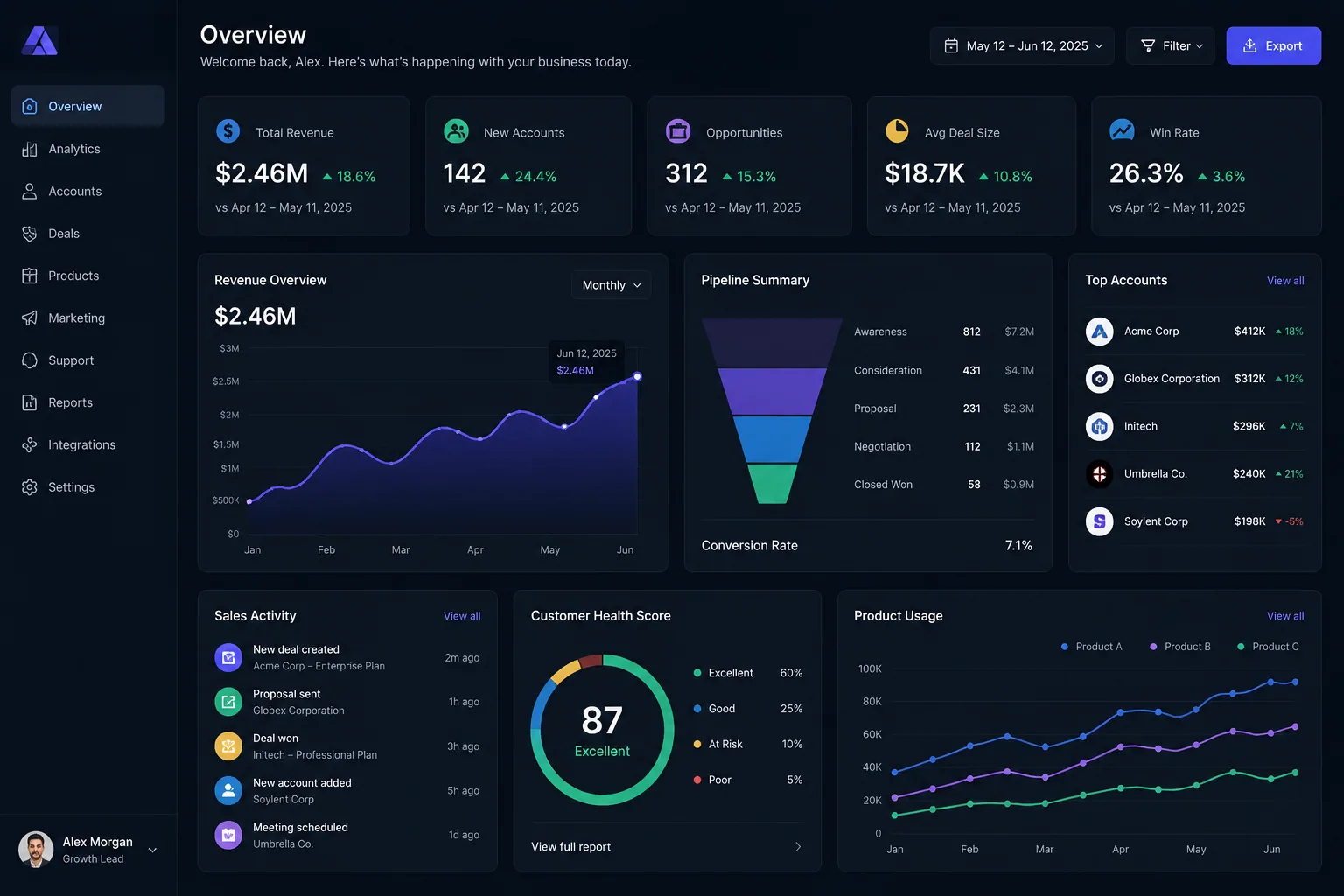
B2B in the Age of AI
B2B buyers now expect consumer-grade digital. Why the future of business isn't more automation — it's better experiences, and what that means for leaders.
Read the essay →
Beyond Agile: Welcome to Rapid Proof™
Agile asked how to build software faster. AI changed the question. Now it's how quickly you can prove you're building the right thing — and that needs a different practice.
Read the essay →
MVP Apps in Weeks, Not Months
The greatest risk today isn't launching too early — it's launching too late. How AI changed the economics of product development, and why learning fast beats building fast.
Read the essay →
Design at the Speed of Thought: Why Vibe Coding + Great Design Is Changing Digital Product Development
AI can write code remarkably well. It can't decide what's worth building. Why pairing vibe coding with experienced design is changing product development.
Read the essay →
Product Design in an AI World
As AI makes building easier, deciding what to build — and why — became exponentially more valuable. Why the future belongs to designers who think bigger than screens.
Read the essay →
The End of the Agency Assembly Line
The old agency model wasn't broken for lack of talent — the process was built for a different era. How AI-assisted design lets us build better digital products, faster.
Read the essay →
What Digital Strategy Actually Means (And Why Most Companies Get It Wrong)
Ten people, ten definitions. Digital strategy isn't a deck, a redesign, or a platform — it's the discipline of making better decisions before you build.
Read the essay →
Why UX Research Is the Most Undervalued Competitive Advantage
Everyone says they're customer-centric. Few are. Why UX research — replacing assumptions with evidence — is the most undervalued advantage in digital.
Read the essay →
Designing With AI: A UX Process Guide
When it comes to AI for design, workflow is everything. AI is not one magic button. The real power is mapping AI to the right stage of design. As…
Read the essay →
Waiting for the Spark: AI, Sentience, and the Mystery We Can’t Explain
I realize a lot of people are obsessed with the idea of AI becoming sentient. It feels like the next great funnel experience for humanity. For years I…
Read the essay →No insights match your search.