
Brand Lives in the Product, Not Just the Marketing Site
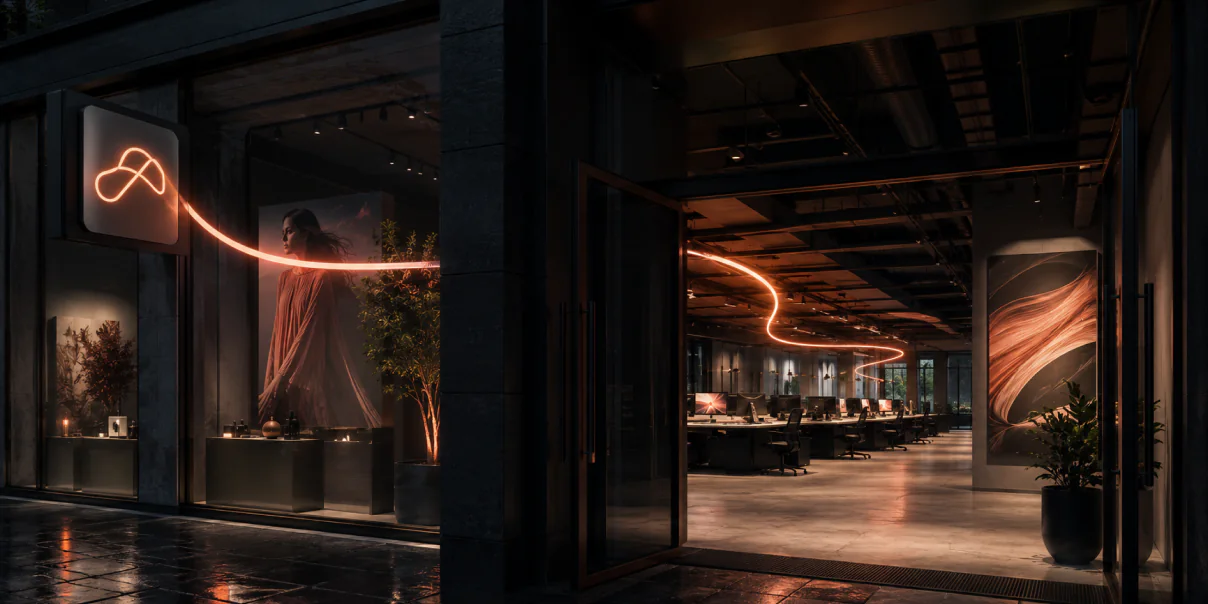
Why the application experience must express the same character as the campaign that sold it.
We’ve all experienced it.
You visit a beautifully designed website. The photography is thoughtful. The typography feels premium. The motion is elegant. The messaging is confident. Every detail communicates care.
You think to yourself, “If the product feels anything like this, it’s going to be exceptional.”
You click Get Started.
And suddenly it’s like you’ve walked into a completely different company. The dashboard looks generic. The typography changes. The buttons feel different. The animations disappear. The language becomes robotic. The personality evaporates.
Everything that convinced you to believe in the brand is replaced by a utility interface that could belong to almost anyone.
It happens far more often than it should. The marketing site promises one experience. The product delivers another. Somewhere between the campaign and the application, the brand gets left behind.
At Artifact, we believe this is one of the biggest missed opportunities in digital product design.
A brand isn’t something customers experience before they become users. It’s something they should continue experiencing every single day.
Because the product isn’t separate from the brand. The product is the brand.
Marketing Makes a Promise
Every marketing website is making a promise. Sometimes explicitly. Sometimes emotionally.
It says: “We’re simple.” “We’re trustworthy.” “We’re innovative.” “We’re premium.” “We’re approachable.” “We’re fast.” “We’re human.”
Those promises aren’t communicated through copy alone. They’re communicated through design. Typography. Color. Photography. Motion. Spacing. Illustration. Microcopy.
Every creative decision contributes to an emotional expectation.
Customers don’t simply buy software. They buy the feeling the software promises to deliver. Which is why the transition into the product matters so much.
The Product Is Where Trust Is Earned
Marketing creates expectation. Products create belief.
The marketing site may persuade someone to sign up. The product determines whether they stay. That’s why consistency between the two experiences matters so much.
Imagine walking into a luxury hotel. The lobby is breathtaking. Warm lighting. Beautiful materials. Exceptional service. Then someone opens the door to your room and it looks like a budget motel.
Technically, you’re still in the same hotel. Emotionally, trust disappears.
Digital products work exactly the same way. The application should fulfill the emotional contract established by the brand.
Brand Doesn’t End at Login
Many organizations unintentionally separate their teams. Marketing owns the website. Product owns the application. Different designers. Different priorities. Different timelines. Different technologies.
Over time, each team optimizes independently. Marketing becomes expressive. Product becomes purely functional.
The result is predictable. Customers experience two different personalities. One before login. Another afterward.
But customers don’t divide organizations that way. To them, it’s one company. One relationship. One experience.
Brand shouldn’t stop at authentication. It should become even more meaningful.
Utility Doesn’t Require Generic Design
There’s a misconception that enterprise software must become visually neutral once people begin working. Function over form. Efficiency over expression. Minimalism at all costs.
Certainly, clarity matters. Products should never sacrifice usability for decoration.
But utility and personality are not opposites. The most memorable products communicate both. Calm. Confidence. Precision. Warmth. Energy. Craftsmanship.
Those qualities don’t interfere with usability. They reinforce it.
Great product design doesn’t remove brand. It expresses brand through restraint.
Typography Is One of the Strongest Brand Signals
Typography rarely receives enough attention during product design. Marketing sites often use carefully selected type scales. Generous spacing. Elegant rhythm. Thoughtful hierarchy.
Then users log in. Everything suddenly defaults to generic system styling. The product loses its voice.
Typography isn’t cosmetic. It’s emotional.
A premium type system creates confidence. Readable hierarchy reduces cognitive effort. Consistent rhythm creates familiarity.
When typography remains intentional across marketing and product experiences, customers subconsciously recognize continuity. The organization feels coherent.
Motion Carries Personality
Motion is another place where products often lose their identity. Marketing sites frequently use elegant transitions. Subtle reveals. Thoughtful pacing. Meaningful animation.
Applications, meanwhile, often feel mechanical. Everything appears instantly. Or not at all.
Motion isn’t decoration. It’s communication.
Good motion explains relationships. Provides feedback. Guides attention. Reduces uncertainty. Most importantly, it reinforces personality.
A calm brand should move calmly. A playful brand should move playfully. A premium brand should move deliberately.
Customers don’t consciously analyze animation timing. They absolutely feel it.
Language Shouldn’t Change Personalities
Many organizations carefully craft their marketing voice. Friendly. Helpful. Confident. Optimistic.
Then the product begins speaking a completely different language. “Operation Complete.” “Request Failed.” “Authentication Required.” “Input Validation Error.”
Technically correct. Emotionally disconnected.
Microcopy matters. Button labels. Empty states. Success messages. Errors. Notifications. Onboarding. Help text. All of these moments reinforce — or weaken — the brand.
Products speak constantly. The question is whether they sound like the same company customers originally trusted.
Visual Rhythm Creates Emotional Consistency
One of the hardest aspects of design to describe is rhythm. Spacing. Density. Pacing. Hierarchy. Breathing room.
Visual rhythm determines how an interface feels. Some products feel frantic. Others feel calm. Some overwhelm users with information. Others guide attention naturally.
Marketing often establishes a particular rhythm. Then product teams unintentionally abandon it.
Maintaining rhythm doesn’t require identical layouts. It requires shared principles. The emotional tempo of the experience should remain recognizable.
Brand Lives in Interaction
Customers remember interactions more than visuals. How quickly something responds. How forgiving forms feel. How helpful validation becomes. How onboarding guides them. How search behaves. How navigation anticipates needs.
Interaction design is brand expression. Thoughtful products communicate respect. Poor interactions communicate indifference.
Every click teaches customers something about the organization behind the software.
Design Systems Bridge the Gap
One reason marketing and product often drift apart is because they use different systems. Different typography. Different color palettes. Different spacing. Different components. Different accessibility standards. Different interaction patterns.
Design systems solve much of this. Not by forcing everything to look identical. By creating shared principles. Design tokens. Typography. Spacing. Motion. Color. Components. Behavior.
The product and marketing experience can evolve independently while still feeling unmistakably related. That’s what mature systems accomplish.
Brand Character Must Survive Complexity
Enterprise applications naturally become more complicated than marketing websites. More data. More workflows. More permissions. More dashboards. More functionality. That’s understandable.
Complexity doesn’t require abandoning character. A premium financial platform can remain elegant. A healthcare application can remain reassuring. An industrial dashboard can remain thoughtfully designed.
Brand expression simply becomes quieter. Less theatrical. More disciplined. But it should never disappear entirely.
Onboarding Is the First Product Conversation
Think about the first few minutes someone spends inside your product. That experience determines whether the promises made by marketing feel authentic.
Does onboarding feel confident? Helpful? Overwhelming? Generic? Personal?
The first interaction inside an application is remarkably similar to walking through the front door of a physical space. It establishes emotional expectations.
Products should welcome people the same way the marketing site invited them.
AI Makes Brand Consistency More Important
Artificial intelligence is accelerating interface creation. Design exploration. Content generation. Personalization. Automation. That’s exciting.
It also creates more opportunities for inconsistency. AI can generate dozens of dashboards. Multiple onboarding flows. Entire interface variations.
Without strong creative direction, products gradually lose recognizable identity.
Design systems become essential. Not because they limit AI. Because they give AI something worth protecting. Brand principles become creative constraints. That’s a powerful combination.
The Best Products Feel Intentional
Customers may never notice why a product feels exceptional. They simply describe it differently. “It feels polished.” “It feels easy.” “It feels premium.” “It feels trustworthy.”
Those reactions don’t happen because of one remarkable screen. They happen because every interaction reinforces the same emotional message.
Consistency compounds. The product begins feeling inevitable. That’s thoughtful design.
Design Teams Must Think Beyond Screens
One of the biggest shifts happening in product design is moving beyond individual interfaces. We’re increasingly designing relationships.
Marketing to product. Product to support. Support to onboarding. Onboarding to customer success.
Every transition either strengthens trust or weakens it. The experience isn’t fragmented. The organization shouldn’t design it that way.
What We Believe at Artifact
At Artifact, we don’t separate brand design from product design. They’re expressions of the same idea.
Marketing introduces the conversation. The product continues it. Every interface should reinforce what the brand stands for. Not through decoration. Through thoughtful execution.
Typography that feels intentional. Motion that communicates confidence. Language that sounds human. Interaction that respects people’s time. Visual rhythm that creates clarity.
Because customers don’t stop experiencing your brand after they click Sign Up. That’s when the relationship actually begins.
The Product Is the Most Important Brand Experience
Organizations invest enormous effort into creating remarkable first impressions. Beautiful campaigns. Compelling websites. Powerful storytelling.
Those things matter. But they represent only the beginning of the customer relationship.
Real loyalty isn’t created by the marketing site. It’s created through repeated product experiences. Every login. Every interaction. Every workflow. Every notification. Every success message. Every thoughtful detail.
The strongest brands don’t create a memorable website and a functional application. They create one continuous experience. One recognizable personality. One visual language. One emotional promise carried consistently from the first advertisement to the thousandth product interaction.
That’s increasingly important as AI makes polished interfaces easier for everyone to generate. Visual quality alone will no longer differentiate products. Character will. Consistency will. Craft will.
The organizations that build lasting brands won’t simply design beautiful marketing websites. They’ll ensure the product customers rely on every day expresses the same care, confidence, and humanity that convinced them to believe in the brand in the first place.
Because brands aren’t built by campaigns. They’re built by experiences repeated over time. And the product is where those experiences become real.