
What Twenty Years of UX Taught Me About Human Nature
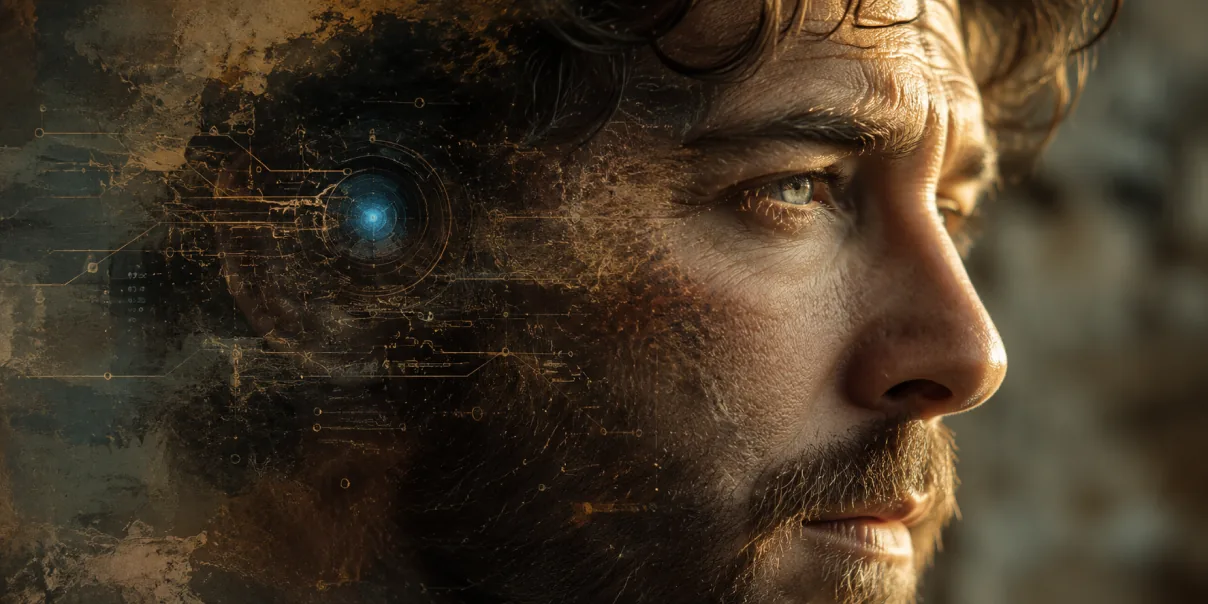
Patterns that never change despite technology.
When I first started designing digital experiences, the conversations were different.
We debated fixed-width layouts. Flash was still relevant. Responsive design didn’t exist. Most people weren’t carrying supercomputers in their pockets. Artificial intelligence wasn’t helping us write code, summarize research, or generate prototypes in seconds.
Everything about our tools has changed. Everything about our workflows has changed. Even the way we define “digital” has changed.
And yet, after nearly two decades of designing products, websites, applications, and enterprise experiences for organizations of every size, I’ve come to a surprising conclusion.
Technology evolves much faster than people do.
The interfaces change. The platforms change. The devices change. The expectations change.
But human nature remains remarkably consistent.
I’ve watched countless design trends come and go, new technologies promise to reinvent everything, and entire industries transform almost overnight.
Through all of it, the same patterns keep showing up.
Not because people resist change. But because people are still people.
If there’s one lesson experience design has taught me, it’s this:
You aren’t designing for technology. You’re designing for humanity.
People Don’t Want Features. They Want Progress.
One of the biggest mistakes organizations make is believing customers buy features.
They don’t. They buy progress.
Nobody wakes up hoping to use another dashboard. Nobody dreams about filling out another form. Nobody is excited to navigate another website.
People have goals. They want to save time. Reduce stress. Feel confident. Accomplish something meaningful.
Technology is simply the vehicle.
Whenever I’ve seen products struggle, it’s rarely because they lacked functionality. It’s because they forgot why people showed up in the first place.
Confusion Always Wins
One lesson has repeated itself on nearly every project I’ve worked on.
When people become confused… they stop.
Sometimes they leave. Sometimes they postpone the decision. Sometimes they call support. Sometimes they choose your competitor.
Confusion is expensive.
Not because users aren’t intelligent. Because uncertainty creates friction.
Every unnecessary decision asks people to spend mental energy. The more they spend, the less likely they are to continue.
Good design isn’t about making people think more. It’s about helping them think less about the interface and more about what they came to accomplish.
People Need Confidence More Than Information
I’ve watched organizations respond to low conversion rates by adding more content. More explanations. More features. More pages. More FAQs. More documentation.
Sometimes that’s helpful. Often it isn’t.
Because the real problem wasn’t missing information. It was missing confidence.
Can I trust this company? Am I making the right decision? What happens after I click? Will this work?
Confidence changes behavior. More information doesn’t always do that.
Nobody Reads Everything
Every designer eventually learns this lesson.
People scan. They compare. They prioritize. They ignore. They return. They skim.
Then they decide whether something deserves deeper attention.
That’s not laziness. It’s efficiency.
The modern world gives us more information than we could ever process. People have adapted. Good design works with that reality instead of fighting it.
Simplicity Is Harder Than Complexity
Adding another feature is easy. Adding another page is easy. Adding another button is easy.
Removing something useful takes discipline.
Throughout my career, I’ve become increasingly convinced that simplicity isn’t the absence of work. It’s the result of it.
Every clean interface represents dozens of difficult conversations.
What matters? What doesn’t? What belongs now? What belongs later?
Those decisions create simplicity. Not minimalism for its own sake. Clarity.
People Remember How Things Felt
Ask someone about a great product they used years ago.
They rarely describe technical details. They remember emotions.
“It was easy.” “It felt intuitive.” “I trusted it.” “It just worked.”
That’s fascinating. Because it reminds us that experience is emotional before it’s technical.
Design isn’t simply organizing screens. It’s shaping memories.
Trust Is Built Quietly
Trust doesn’t usually arrive because of one dramatic moment.
It accumulates. Through consistency. Through thoughtful interactions. Through predictable behavior. Through honest communication. Through visual clarity. Through keeping promises.
Every interaction either adds a little trust or removes a little trust.
That’s true whether you’re designing a banking platform, a healthcare application, or an ecommerce checkout.
People notice integrity. Even when they can’t explain why.
Nobody Likes Feeling Lost
One of the strongest emotional reactions users experience is disorientation.
Where am I? What happened? Did that work? How do I get back? What’s next?
These questions appear in every digital experience. The best products answer them before users have to ask.
Navigation. Hierarchy. Motion. Feedback. Progress indicators.
These aren’t interface elements. They’re reassurance.
Choice Can Become a Burden
Early in my career I believed giving people more options created better experiences.
Experience taught me otherwise.
People appreciate freedom. But they also appreciate guidance.
Too many choices create hesitation. Too many paths create uncertainty.
Sometimes the most user-friendly thing you can do is recommend a direction.
Not because users can’t choose. Because helping people choose is part of good design.
People Want to Feel Competent
One of the least discussed goals in UX is competence.
People enjoy feeling capable.
When a product helps someone complete a task without confusion, they don’t just appreciate the software. They appreciate themselves.
Good products make users feel smart. Bad products make users feel inadequate.
That’s an enormous difference.
Curiosity Is Stronger Than Marketing
I’ve worked on enough digital products to know that curiosity consistently outperforms interruption.
People enjoy discovering. Exploring. Learning. Making connections.
The best products invite curiosity. They don’t force attention.
That’s one reason storytelling continues outperforming feature lists.
Stories activate imagination. Specifications activate comparison.
Humans Seek Patterns
Our brains are extraordinary pattern-recognition machines.
We look for consistency everywhere. Navigation. Typography. Spacing. Behavior. Language.
When patterns remain consistent, people learn quickly. When patterns constantly change, cognitive load increases.
Design systems aren’t valuable because they’re organized. They’re valuable because human beings naturally learn through repetition.
Technology Changes Expectations, Not Human Nature
Artificial intelligence has dramatically accelerated how products are created.
Research happens faster. Code ships faster. Content is generated faster. Ideas multiply faster.
None of that changes what people fundamentally need.
They still seek clarity. Trust. Confidence. Progress. Belonging. Recognition. Ease. Purpose.
The tools evolve. The motivations remain surprisingly stable.
People Forgive Honest Mistakes
One thing I’ve always found encouraging is that users are incredibly forgiving when organizations communicate honestly.
A delay explained clearly. An error acknowledged transparently. A mistake corrected quickly.
People understand that technology isn’t perfect. What they struggle with is silence. Or confusion.
Transparency often creates more loyalty than perfection.
Good Design Is Empathy in Practice
People often ask me what UX really is. Research? Wireframes? Testing? Prototypes? Journey maps?
All of those matter. But underneath them sits something simpler.
Empathy.
Not empathy as a buzzword. Empathy as disciplined curiosity. The willingness to understand another person’s perspective before proposing a solution.
That’s what separates user-centered design from feature-centered development.
Every Product Reflects Its Makers
One realization has become clearer every year I’ve spent in this profession.
Products inherit the values of the teams that build them.
Organizations obsessed with internal politics create confusing products. Organizations obsessed with customers create helpful ones.
Culture leaks into design.
You can see it in navigation. You can see it in copy. You can see it in support experiences. You can feel it.
That’s why UX isn’t just about interfaces. It’s about organizational alignment.
AI Doesn’t Replace Human Understanding
As AI becomes more capable, I hear the same question repeatedly.
“Will UX become less important?”
I actually believe the opposite.
AI makes execution dramatically faster. But execution was never the hardest part. Understanding people is.
AI can generate interfaces. It cannot experience frustration. It can summarize interviews. It cannot build genuine empathy. It can identify patterns. It cannot decide which human problems deserve solving.
That remains our responsibility.
Human Nature Is the Constant
When I look back over twenty years, I don’t remember specific design trends nearly as much as I remember recurring human behaviors.
People still seek clarity. People still avoid uncertainty. People still value honesty. People still appreciate thoughtful craftsmanship. People still want technology to reduce effort rather than increase it. People still remember how experiences made them feel.
Those truths haven’t changed.
And I don’t think they’re going to.
Designing for the Next Twenty Years
The future of design won’t be defined by whichever technology arrives next. It will be defined by how well we use those technologies to serve people.
We’ll have smarter AI. More immersive interfaces. New interaction models. Entirely new categories of products.
That’s exciting.
But no matter what those products look like, they’ll still be used by people carrying the same hopes, fears, motivations, and limitations we’ve always had.
The best designers won’t simply understand emerging technology. They’ll understand timeless humanity.
The Work Has Always Been About People
When I first entered this profession, I thought I was learning how to design digital products.
Looking back, I realize I was learning something much bigger. I was learning how people think.
How they decide. How they hesitate. How they trust. How they become overwhelmed. How they gain confidence. How they make progress.
That’s the real work.
Technology is the canvas. Human nature is the subject.
And while I have no doubt the next twenty years will introduce tools we can’t yet imagine, I’m equally confident about something else.
People will still want to feel understood. They’ll still want simplicity over complexity. They’ll still want confidence over confusion. They’ll still choose experiences that respect their time and attention.
At Artifact Digital, that’s the foundation we keep coming back to.
Because trends come and go. Platforms rise and fall. Artificial intelligence will continue to reshape how we build.
But if you design for enduring human needs instead of temporary technological moments, your work has a much better chance of lasting.
In the end, the most valuable thing twenty years of UX has taught me isn’t how to use better tools.
It’s how to better understand people.
And that’s a lesson no technology will ever make obsolete.