
B2B in the Age of AI
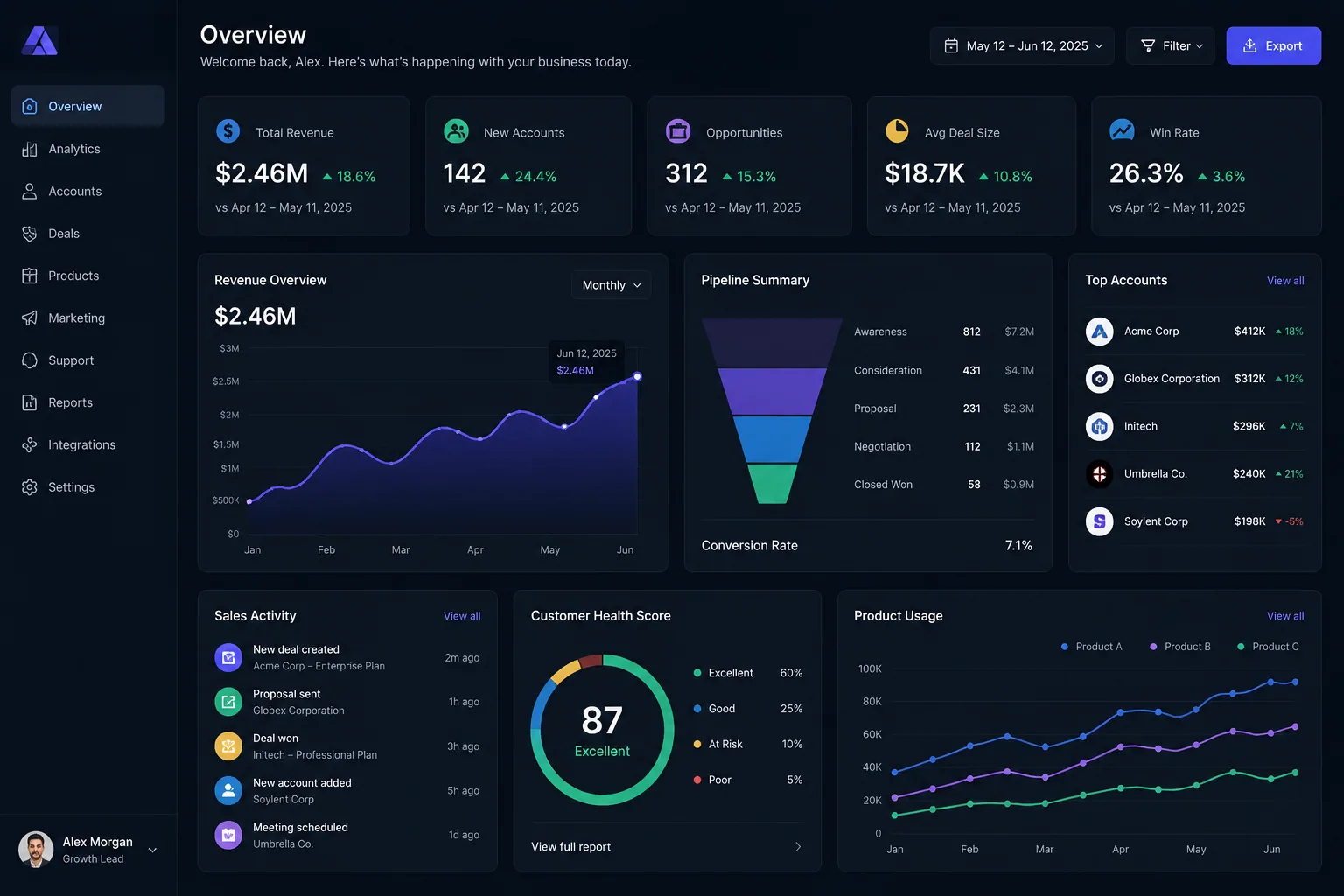
Why the future of business isn’t more automation — it’s better experiences.
For decades, business-to-business companies competed on products, pricing, and relationships.
If you manufactured a better product, offered a better contract, or had the strongest sales team, you won.
Digital experiences were often treated as an afterthought — a website that looked respectable, a customer portal that functioned well enough, and a CRM that kept the sales team organized.
Those days are over.
Artificial intelligence is changing not only how businesses operate, but how they discover vendors, evaluate solutions, purchase products, and build long-term relationships.
The companies that will thrive over the next decade won’t simply adopt AI. They’ll rethink the entire customer experience around it.
At Artifact Digital, we believe AI represents the biggest transformation in business since the internet itself. But contrary to popular opinion, the future isn’t about replacing people with machines.
It’s about creating digital experiences that allow people to make better decisions, faster.
The New Expectations of B2B Buyers
Today’s buyers don’t think like buyers did ten years ago. They’re accustomed to the convenience of consumer technology.
They expect:
- Instant answers.
- Personalized experiences.
- Self-service purchasing.
- Intelligent recommendations.
- Transparent pricing.
- Fast onboarding.
- Seamless digital interactions.
Whether someone is ordering dinner, booking travel, or researching enterprise software, the expectation is the same. Digital should feel effortless.
Yet many B2B organizations still operate digital ecosystems built for another era.
Complex navigation. Endless forms. Disconnected portals. Outdated content. Multiple logins. Manual approvals. Weeks of waiting for proposals.
These aren’t merely inconveniences. They’re competitive disadvantages.
The uncomfortable part is that the person evaluating your enterprise platform on Tuesday morning is the same person who ordered groceries on their phone in ninety seconds on Monday night. They don’t run two different standards. They don’t grant you a B2B exemption because your procurement process is complicated. They just notice that you’re harder to deal with than everyone else in their life, and that impression arrives long before your sales team does.
AI Is Raising the Standard
Artificial intelligence has fundamentally changed what’s possible.
Organizations can now:
- Personalize content in real time.
- Generate proposals instantly.
- Analyze customer behavior continuously.
- Recommend products intelligently.
- Summarize complex documentation.
- Surface insights automatically.
- Accelerate product development.
- Deliver meaningful support around the clock.
The technology itself isn’t revolutionary because it’s intelligent. It’s revolutionary because it removes friction.
Every minute saved. Every unnecessary click eliminated. Every question answered faster. Every workflow simplified.
These improvements compound into dramatically better customer experiences.
Experience Has Become the Product
Many organizations still believe they’re selling software, equipment, consulting, or services. Increasingly, they’re selling an experience.
How easy is it to learn about your company? How quickly can buyers understand your value? Can they find answers without contacting sales? Can they explore products independently? Can they accomplish meaningful work immediately after signing up?
These moments define modern B2B relationships.
A beautifully engineered product hidden behind frustrating experiences rarely succeeds. Conversely, exceptional experiences create trust long before a contract is signed.
This is hard for a lot of B2B organizations to hear, because it means the thing you’re proudest of — the engineering, the domain expertise, the decades of accumulated capability — is being judged through a surface you may have treated as marketing’s problem. Your customers aren’t evaluating your product. They’re evaluating the only part of it they can see.
AI Doesn’t Replace Relationships
One of the greatest misconceptions surrounding artificial intelligence is that it removes the human element from business.
The opposite is true.
By automating repetitive work, AI creates more opportunities for meaningful human interaction.
Sales teams spend less time gathering information and more time advising customers. Support teams spend less time answering repetitive questions and more time solving meaningful problems. Design teams spend less time documenting interfaces and more time understanding customer behavior. Engineers spend less time writing repetitive code and more time solving complex challenges.
AI removes busy work. People create value.
There’s a caution buried in this, though, and it’s worth saying plainly: automation applied to a relationship you haven’t earned reads as avoidance. A chatbot standing between a frustrated customer and a person who could actually help isn’t efficiency — it’s a wall with better manners. The goal isn’t fewer human conversations. It’s fewer pointless ones, so the real conversations can happen with someone who has the context to be useful.
The Rise of Intelligent Customer Journeys
Traditional customer journeys were largely static.
Marketing generated leads. Sales qualified prospects. Implementation onboarded customers. Support addressed issues.
Today, those stages are blending together. AI enables dynamic customer journeys that continuously adapt based on behavior.
A prospect downloading a white paper may immediately receive personalized product recommendations. An existing customer struggling with adoption may receive contextual guidance before opening a support ticket. An executive reviewing usage analytics might automatically discover opportunities for expansion.
Every interaction becomes an opportunity to create value.
The customer journey is no longer linear. It’s intelligent.
Which exposes a problem most enterprises would rather not look at: customers don’t experience your departments, they experience your journey — and your journey is usually organized around your org chart. Marketing owns one system, sales owns another, support owns a third, and none of them share a view of the same human being. AI doesn’t fix that. It makes the seams more obvious, because a personalized experience stitched across four disconnected systems is just four disconnected systems that now know your name.
Product Design Matters More Than Ever
Ironically, AI is making design more important — not less.
As technology lowers the barrier to building software, experience becomes the differentiator.
Anyone can generate an interface. Far fewer can create a product that feels intuitive, trustworthy, and aligned with customer needs.
Exceptional product design answers questions before users ask them. It reduces cognitive load. It eliminates unnecessary decisions. It builds confidence through clarity.
These qualities aren’t accidental. They’re intentional. And they’re becoming increasingly valuable.
Speed Is Becoming a Competitive Advantage
Historically, enterprise software projects measured timelines in months or even years.
Discovery. Requirements. Wireframes. Development. Testing. Launch.
By the time products reached customers, market expectations had already evolved.
Artificial intelligence is changing that rhythm. Organizations can prototype ideas in days. Test concepts immediately. Iterate continuously. Launch meaningful improvements every week instead of every quarter.
Speed isn’t about moving recklessly. It’s about learning faster.
Organizations that learn faster create better products. Better products create stronger customer relationships. Stronger relationships create sustainable growth.
Why Traditional Agency Models Are Breaking Down
The agency model that dominated digital transformation for decades was built around specialization.
Strategists created documentation. Researchers conducted interviews. Designers created mockups. Developers implemented designs. Project managers coordinated communication.
Every handoff introduced delay. Every translation increased complexity.
Artificial intelligence allows experienced teams to collapse many of these steps. Ideas become prototypes faster. Feedback happens earlier. Documentation becomes lighter. Decision-making becomes more collaborative.
Instead of waiting months to review static presentations, clients interact with working software.
The conversation shifts from “Can you imagine this?” to “Let’s improve this.”
That’s a fundamentally different way to build products.
AI Doesn’t Eliminate Craft
One concern many organizations express is that AI-generated products will all look the same.
They’re right — if AI replaces design.
At Artifact Digital, AI never replaces design. It amplifies it.
Our process still begins with understanding people. We study business goals. We research customer behavior. We define product strategy. We create scalable design systems. We establish accessibility standards. We shape meaningful interactions.
Only then do we leverage AI to accelerate execution.
Technology handles repetition. People create differentiation.
Enterprise Doesn’t Have to Mean Slow
Large organizations often accept lengthy digital projects as inevitable.
Complex governance. Multiple stakeholders. Legacy technology. Security requirements. Compliance.
These realities don’t disappear. But they no longer require unnecessary bureaucracy.
Modern product teams can move quickly while maintaining enterprise-grade quality.
Rapid prototyping. Continuous validation. Design systems. AI-assisted development. Automated testing. Incremental delivery.
Together, these approaches dramatically reduce time to value without sacrificing reliability.
Worth being precise here, because “enterprises are slow” is usually a misdiagnosis. Compliance isn’t what takes eighteen months. Waiting is. Waiting for the committee, waiting for the handoff, waiting for the next quarterly release train, waiting for a decision nobody was empowered to make. The regulated parts of the work are rarely the bottleneck — they’re just the most defensible excuse for one.
The Future Is Collaborative
The future isn’t humans versus AI. It’s humans working alongside AI.
Designers become more strategic. Developers become more creative. Researchers uncover deeper insights. Executives make better-informed decisions.
Technology becomes an extension of human capability rather than a replacement for it.
Organizations that embrace this mindset won’t simply become more efficient. They’ll become more innovative.
What This Means for B2B Leaders
The next decade will reward organizations willing to rethink how they engage customers.
Ask yourself:
- Is your website helping buyers make decisions or simply presenting information?
- Does your customer portal reduce friction or create it?
- Can customers accomplish meaningful work without contacting support?
- Are your internal tools empowering employees?
- Is your digital experience reinforcing your brand?
- Are you learning from customer behavior continuously?
- Are you designing for tomorrow’s expectations or yesterday’s processes?
These questions matter more than ever. Because your competitors are asking them too.
If you want an honest answer to any of them, the fastest route is usually to watch a real customer try. Not a stakeholder walkthrough, not a demo — an actual person attempting an actual task while you keep quiet. Thirty minutes of that will tell you more than a quarter of dashboards, and it tends to end the internal debate immediately.
The Artifact Digital Perspective
At Artifact Digital, we believe technology should never be the headline. People should.
Artificial intelligence is an extraordinary tool, but it isn’t the destination. The destination is creating digital experiences that help organizations build stronger relationships, solve meaningful problems, and create lasting value.
We combine digital strategy, product design, AI-powered development, and enterprise experience thinking to help organizations move from ideas to impactful digital products faster than ever before.
Whether we’re designing an enterprise platform, building a customer portal, modernizing a website, creating an AI-powered application, or developing a native mobile experience, our goal remains the same.
Build experiences that people love. Build products that businesses depend on. Build digital ecosystems that continue creating value long after launch.
Looking Ahead
The organizations that define the next generation of B2B won’t necessarily have the biggest engineering teams. They won’t have the largest marketing budgets. They won’t simply deploy the most AI.
They’ll be the organizations that understand a simple truth.
Business has always been about people. AI simply gives us better tools to serve them.
The future of B2B belongs to companies that combine human insight, exceptional design, intelligent technology, and the courage to move faster than ever before.
That’s the future we’re helping our clients build every day. And we’re just getting started.