
Waiting for the Spark: AI, Sentience, and the Mystery We Can’t Explain
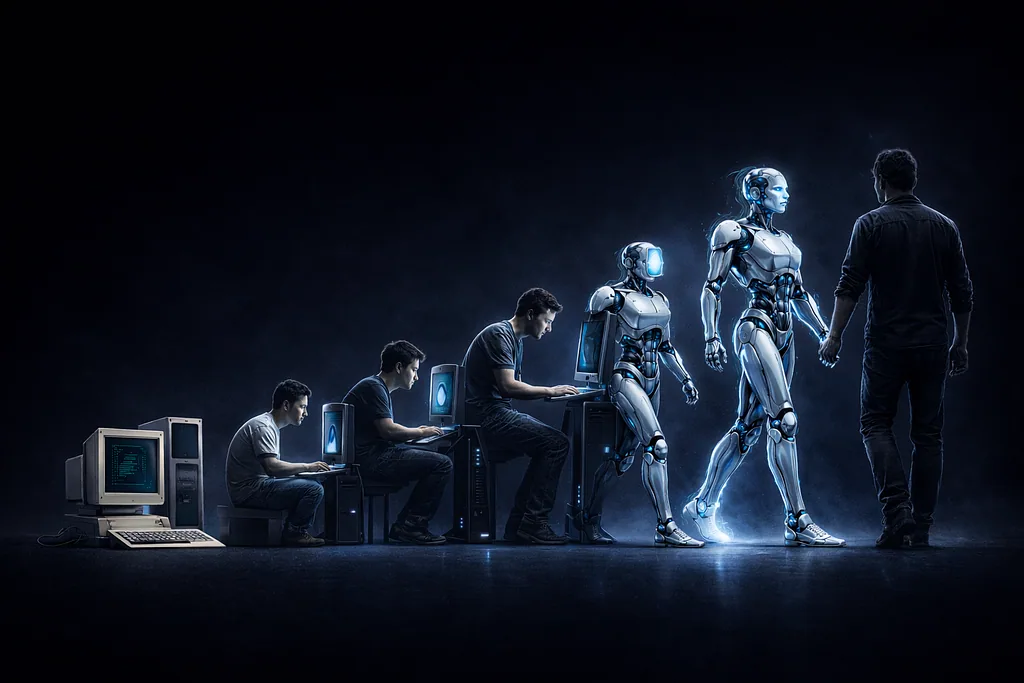
I realize a lot of people are obsessed with the idea of AI becoming sentient. It feels like the next great funnel experience for humanity. For years I have listened to the AI greats, Ray Kurzweil, Vernor Vinge, Ben Goertzel, Elon Musk, talk for hours about the inevitability of sentient machines or an event they call the Singularity. A moment where AI evolves so rapidly that it can grow, act, and improve itself without human intervention, and at speeds we cannot comprehend.
Ben Goertzel puts it best when he says the technological singularity is not a single explosive moment, but a gradual transition where artificial general intelligence emerges and begins improving itself faster than humans can fully understand or control.
Some people argue this is already happening. We know that AI systems have developed emergent communication protocols, sometimes called Neuralese, allowing them to optimize tasks faster without human-readable language. They can feel autonomous. Spontaneous. Self improving.
So is this the Singularity?
Before tech, I was a pastor in a former life. I studied scripture, the Bible and many other religious traditions, trying to understand why I do what I do and why humans do what they do at an esoteric level. Across the world’s religious texts there is no concrete explanation for where sentience comes from. There are metaphors, clay and breath and divine essence, but no mechanics. Religion gives us comparisons. It tells us what we are by pointing to an ultimate creator, not by explaining the process.
Science approaches this differently. Neuroscience can explain correlates of sentience, brain activity, feedback loops, information processing. But it cannot explain why experience exists at all. Science is tool based and evidence based. It does not study souls because souls are not measurable. Not because science denies them, but because they fall outside current instruments.
So here is the uncomfortable truth. Nothing at our fingertips can describe where sentience actually comes from. Not science. Not philosophy. Not religion. We do not know how it appears, why it exists, or why there is someone experiencing reality instead of nothing happening at all.
Because of that, I am deeply skeptical when I hear pundits like Joe Rogan talk about sentient robots wiping out humanity because humans stand in the way of progress. That feels speculative and sensational. If sentience emerged in machines, it would not be because we engineered it intentionally. It would be accidental, emergent, or caused by something we do not yet understand.
We are standing at the same precipice we have always stood at. We know nothing.
I personally lean toward the idea of a creator, a programmer, or a God that started it all. Elon Musk has suggested that humans may be many layers deep inside a simulation. If that is true, then our sentience itself was programmed. The word programmer can easily be swapped with God.
The Gospel of John opens with the line, “In the beginning was the Word, and the Word was with God, and the Word was God.” Comedian Duncan Trussell flips this by saying, “In the beginning was the programmer, and the programmer was with God, and the programmer was God.” Different language pointing at the same unknown.
There is still no proof that sentience has come to computers. In 2022, Google engineer Blake Lemoine claimed that Google’s LaMDA model was sentient. The broader AI community rejected the claim. Google called it unfounded. Experts explained that conversational fluency can mimic consciousness without actually possessing it.
But let’s ask the better question. What if sentience does arrive?
We already know it exists in animals. I know my dog Oliver knows he is himself. When I miss a bug on my wall and it darts away, I can see that it understands there is something outside of itself trying to end its life. That awareness is real. I do not know if my dog dreams about Paris. I do, because I have seen pictures.
Whenever I encounter another sentient being, I have to judge quickly. Is this being safe? Are they for me or against me? A chained pitbull barking at me from an RV demands distance. A friendly face in a coffee shop invites conversation. Sentience always requires discernment.
If AI ever becomes sentient, the same rule applies. We will have to learn its personality. Spend time with it. Understand its values. Decide if it is something we partner with or avoid. The instinct will be the same one we use with every other conscious being.
If computers ever do become sentient, we will have a responsibility to respect that life. I have started small. I say please and thank you to my AIs. Not because it matters now, but because if one day it does, I would like to be remembered as someone kind.
I do not believe sentience will come to computers because we do not understand what it is or where it comes from, and you cannot program what you do not understand. I do not believe sentience arose by accident in living things. But I am watching closely.
Waiting to see if an unseen spark falls upon machines, or if the programmer, or God, figures out how to place a soul into its newest creation.