
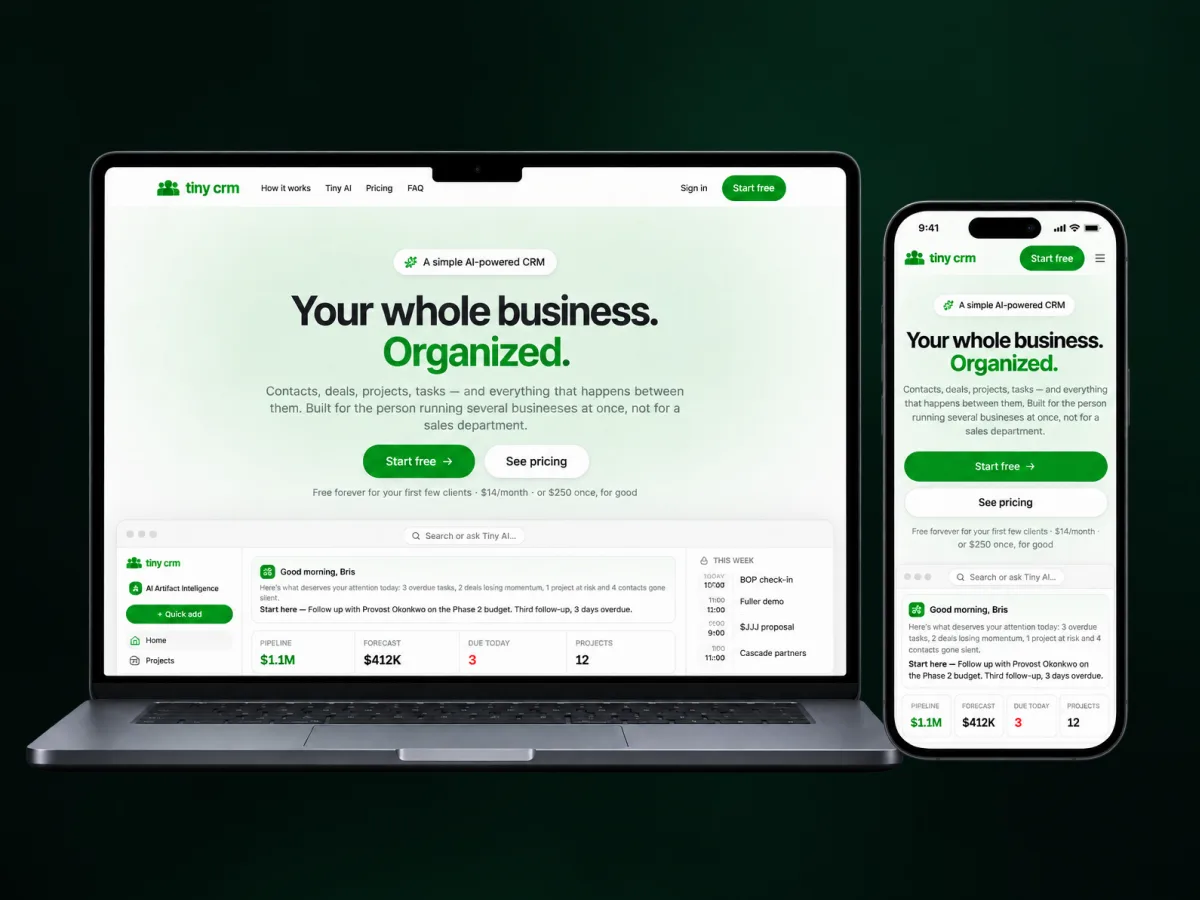
Tiny CRM
A CRM for people running the whole business, not a sales department — with the day's priorities on the first screen.
A web app, a customer portal, an internal tool, a configurator, a product you intend to sell. From the first working version to production software, with strategy, UX, visual design and engineering in one senior team — the people you meet are the ones who build it.
What has to be true for this to work, what the first version must include, and what can wait. Sometimes the honest answer is that an existing tool already does it.
Real screens and flows early, compared against alternatives, in front of the people who will use it — before any of it is expensive to change.
Data model, integrations, permissions, payments and automated tests. Not a prototype with a demo label on it.
Inside the workflow, doing real work — summarizing, drafting, flagging, sorting — rather than a chatbot bolted onto a corner of the screen.
Your code, your accounts, documentation that means something, and a roadmap for what comes after the first release.
A CRM for people running the whole business, not a sales department — with the day's priorities on the first screen.
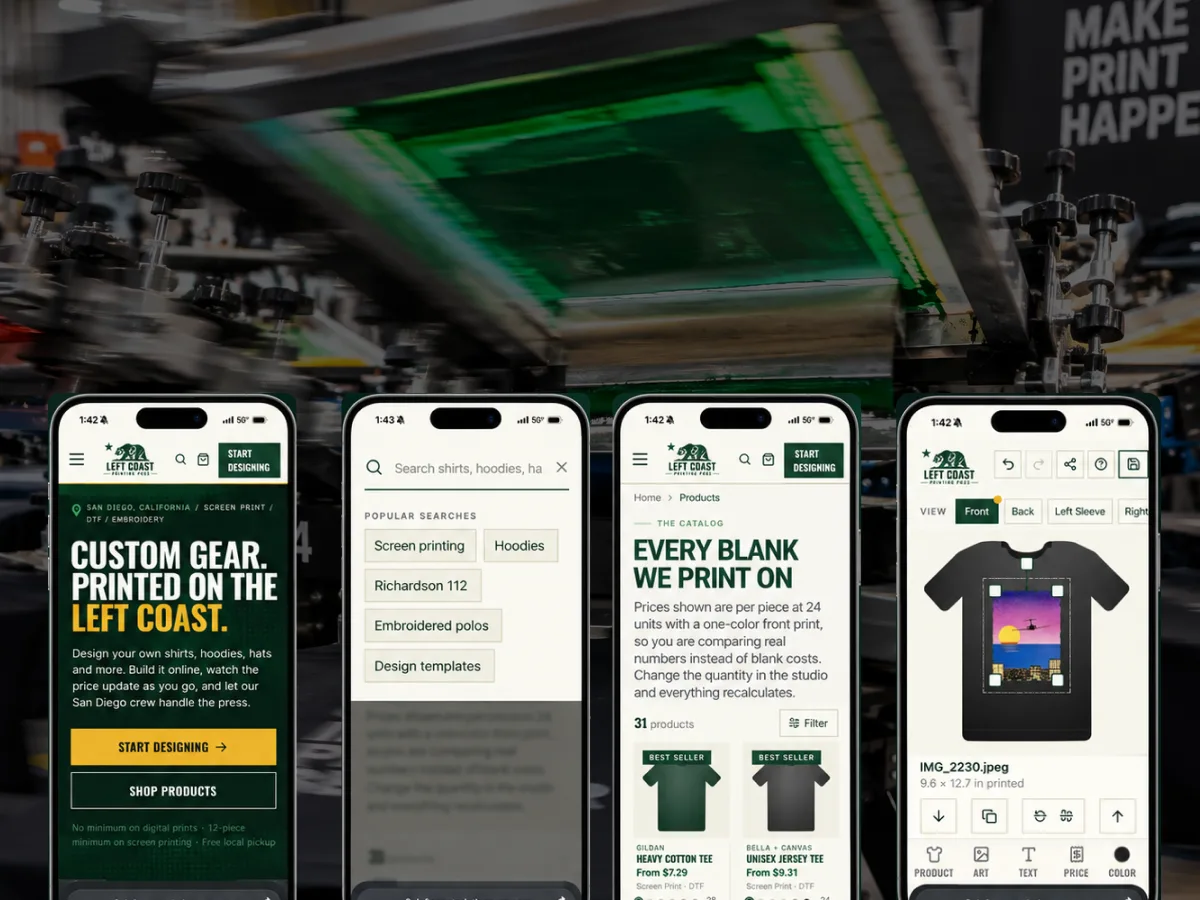
A print shop site where customers place their own artwork on the garment — and the order arrives ready to produce.

An AI website improvement platform that audits your site against real competitors and turns the findings into prioritized, trackable work.
What the business needs, who it serves, and what the site or app actually has to do. Before anything gets designed.
Structure first, then the look: what goes where, how it works, and how it feels to use. You see real screens early.
Designers and engineers on the same team, so what gets built is what was designed — fast, accessible and maintainable.
Testing, performance, accessibility, analytics, search and the unglamorous checks that make a launch boring in the best way.
Real usage tells us what to change next: search visibility, conversion, new features, and the things you couldn't know before people arrived.
A few sentences is enough. You’ll get a straight answer about what it would take — and whether we’re the right people for it.