
AI Makes Art Direction More Important, Not Less
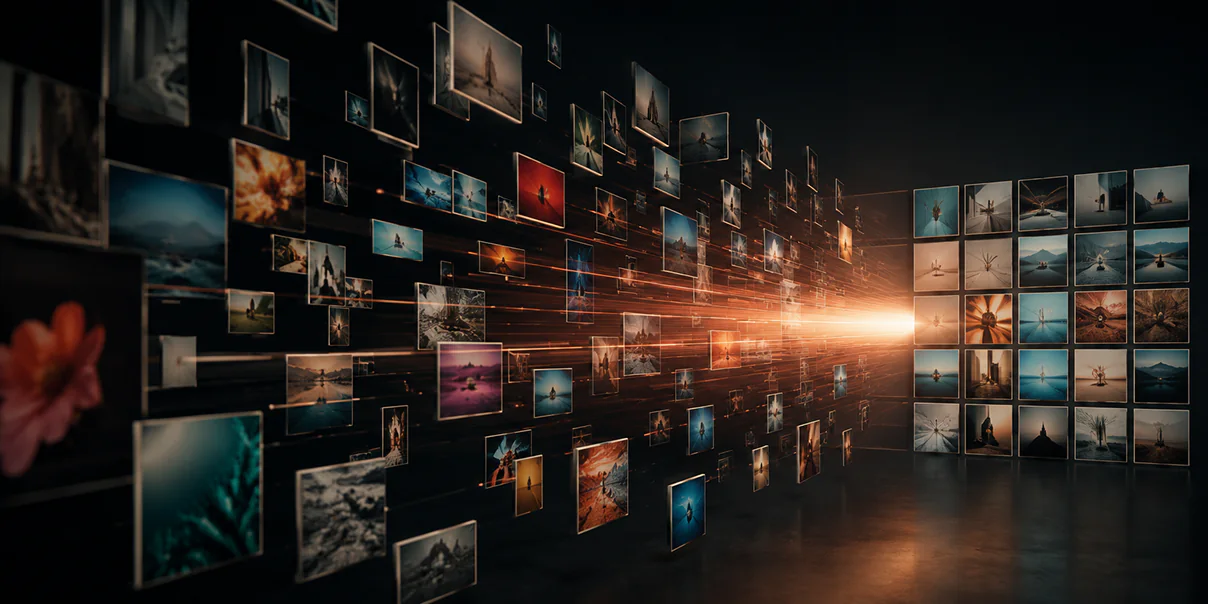
When images become easy to generate, the value shifts toward building a coherent visual world.
For decades, creating beautiful imagery was expensive.
You hired photographers. Booked studios. Built sets. Coordinated talent. Commissioned illustrators. Retouched photographs. Managed production schedules.
Creative work wasn’t limited by ideas. It was limited by time, budget, and logistics.
Artificial intelligence has fundamentally changed that equation. Today, one person with a laptop can generate hundreds of polished images before lunch. Campaign concepts. Editorial illustrations. Product renders. Lifestyle photography. 3D environments. Concept art. Entire mood boards.
The cost of producing imagery has collapsed. That’s extraordinary.
It’s also causing many organizations to ask the wrong question. “If AI can create images, do we still need art directors?”
The answer is yes. Perhaps more than ever.
Because the challenge has never been creating images. The challenge has always been deciding which images belong together.
AI has dramatically lowered the cost of production. It has not replaced taste. It has not replaced judgment. It has not replaced narrative. And it certainly has not replaced the ability to build a visual world that customers immediately recognize as yours.
At Artifact, we believe AI isn’t reducing the importance of art direction. It’s elevating it.
Because when everyone can generate beautiful images, beauty alone stops being the differentiator. Consistency becomes the differentiator. Identity becomes the differentiator. Creative leadership becomes the differentiator.
Generation Is No Longer the Bottleneck
Until recently, most creative conversations revolved around production. Can we afford this shoot? Can we commission these illustrations? Do we have enough time? How many revisions are possible?
Today those questions are changing. Production is increasingly abundant. A dozen concepts can become a hundred. A hundred variations can become a thousand.
The bottleneck has moved. It no longer sits between imagination and execution. It sits between possibility and decision.
Because abundance creates a new problem. Which version represents the brand?
Beautiful Doesn’t Mean Belonging
One of AI’s greatest strengths is producing visually compelling work. The problem is that compelling isn’t the same thing as consistent.
Imagine asking five designers to generate imagery for the same company. Without direction, you’ll likely receive five excellent — but completely different — visual styles. One cinematic. One minimalist. One surreal. One hyperrealistic. One editorial.
Each image may be technically impressive. Collectively, they don’t create a recognizable brand.
That’s because branding isn’t about isolated excellence. It’s about repeated coherence.
Customers Remember Worlds, Not Pictures
Think about the strongest brands in the world. You don’t remember individual images. You remember visual worlds.
A distinct atmosphere. A recognizable rhythm. A consistent emotional tone.
Every photograph feels related. Every illustration belongs. Every advertisement speaks the same visual language. The images become interchangeable because the identity remains unmistakable.
That’s art direction. It’s not selecting pretty pictures. It’s constructing a universe.
Every Brand Has a Visual Vocabulary
Just as language has grammar, brands have visual vocabulary. Lighting. Composition. Perspective. Texture. Negative space. Contrast. Color temperature. Depth. Typography. Motion. Illustration style. Subject matter. Photography. Iconography.
None of these exist independently. Together, they create personality.
AI can generate any one of these. Art direction decides how they work together.
Style Is Not Identity
One misconception surrounding AI-generated imagery is confusing style with identity.
Prompting for “minimal luxury.” “Premium editorial.” “Cinematic realism.” “Scandinavian.” “Futuristic.” Produces style.
Identity requires something deeper. Identity asks: Why do we frame products this way? Why does our lighting feel restrained? Why is our typography understated? Why do we avoid certain colors? Why does every campaign feel calm instead of energetic?
Those aren’t aesthetic decisions. They’re strategic ones.
Campaigns Should Feel Like Chapters
One challenge organizations face is maintaining consistency across multiple campaigns. Different products. Different launches. Different audiences. Different seasons.
Without thoughtful direction, each campaign begins reinventing the brand. Customers experience constant visual resets.
The strongest brands behave differently. Each campaign introduces something new while remaining unmistakably connected to everything that came before it. Like chapters in the same book. Not entirely different stories.
That’s what art directors protect.
Products Deserve the Same Visual Discipline
Many organizations invest tremendous energy into marketing imagery. Then product teams begin creating illustrations independently. Dashboard graphics. Empty states. Onboarding screens. Icons. Support content. Help articles. Internal tools.
Slowly, another visual language emerges. Customers may never consciously notice. They absolutely feel it. The product begins drifting away from the brand.
Editorial Content Shapes Brand Perception
One area becoming increasingly important is editorial imagery. Articles. Insights. Whitepapers. Reports. Thought leadership. Social content.
Historically these pieces often received inconsistent treatment. Stock photography. Random illustrations. Different color palettes. Mixed visual quality.
AI makes generating editorial imagery dramatically easier. That’s wonderful. Provided every illustration reinforces the same brand narrative. Otherwise editorial becomes visual noise.
AI Produces Options. Art Direction Creates Standards
One of AI’s greatest gifts is exploration. Instead of generating one concept, teams generate fifty. That’s incredibly valuable.
The mistake is treating all fifty as equally useful.
Creative leadership exists to evaluate. Refine. Edit. Reject. Strengthen.
Every image should answer questions like: Does this belong? Does this reinforce our identity? Does this feel familiar? Would someone recognize this without seeing our logo?
Those questions matter far more than prompt quality.
Taste Is Becoming More Valuable
Taste is one of the most misunderstood concepts in design. It isn’t preference. It isn’t trend awareness. It isn’t opinion.
Taste is informed judgment. Knowing when something feels excessive. Knowing when simplicity communicates confidence. Knowing which image strengthens the story. Knowing which image distracts from it.
AI has remarkable pattern recognition. Taste requires discernment. Those are not the same skill.
Constraints Create Stronger Creative Work
One of the biggest myths about creativity is that unlimited freedom produces the best ideas. The opposite is often true.
Great brands embrace constraints. Only this lighting. Only these compositions. Only these materials. Only this typography. Only this pacing. Only this emotional tone.
AI becomes dramatically more useful inside thoughtful constraints. Instead of asking it to invent the brand every time, we ask it to reinforce an already established visual language.
Consistency improves. Quality improves. Recognition improves.
Prompt Libraries Are Not Art Direction
Some organizations respond to AI by building enormous prompt libraries. That’s helpful. It’s not enough.
Prompts explain how to generate assets. Art direction explains why those assets exist.
Prompt: “Create a cinematic portrait.” Art direction: “Every portrait should communicate quiet confidence through restrained lighting, generous negative space, and subtle warmth because our brand values clarity over spectacle.”
Those are very different levels of thinking. One generates. The other leads.
Motion Belongs Inside the Visual World
Art direction extends beyond static imagery. Motion matters. Transitions. Animation timing. Video pacing. Camera movement. Depth. Parallax. Micro-interactions.
These choices contribute to how the brand feels. A calm brand shouldn’t suddenly introduce frantic motion. A luxury brand shouldn’t rely on chaotic transitions.
The visual world includes behavior. Not just pictures.
AI Cannot Build Long-Term Memory
One fascinating aspect of branding is recognition over time. Customers remember patterns. Repeated experiences. Repeated visual cues. Repeated emotional signals.
AI doesn’t naturally preserve long-term memory. Every generation begins fresh.
Organizations must supply that continuity. That’s exactly what art direction provides. A framework connecting today’s campaign to next year’s product launch.
The Creative Director Becomes a Curator
As AI expands, creative leadership shifts. Less time creating every asset manually. More time defining principles. Selecting directions. Refining outputs. Building systems. Maintaining consistency.
The role becomes increasingly curatorial. Not because creativity disappears. Because abundance requires editing.
The ability to say “no” becomes more valuable than the ability to generate “more.”
Systems Outlast Campaigns
One campaign eventually ends. A visual system continues.
Organizations shouldn’t optimize solely for the next launch. They should optimize for the next hundred launches.
That’s why visual systems matter. Photography principles. Illustration rules. Lighting standards. Typography. Motion philosophy. Editorial treatment. Iconography.
Every future campaign begins from the same foundation. Recognition compounds.
What We Believe at Artifact
At Artifact, we embrace AI as an extraordinary creative partner. We use it constantly. Concept exploration. Editorial imagery. Campaign development. Mood boards. Product visualization. Rapid iteration.
But AI never replaces creative direction. It amplifies it.
Technology can generate an image in seconds. Building a recognizable visual world still requires human judgment. It requires asking not simply: “Is this beautiful?” But: “Does this belong?”
That question defines every enduring brand.
The Future Belongs to Visual Worlds
Artificial intelligence is transforming creative production faster than most of us imagined possible. The technical ability to create remarkable imagery is rapidly becoming universal.
Soon, nearly every organization will have access to the same generation tools. The same rendering quality. The same speed. The same abundance.
That means the competitive advantage shifts somewhere else. Not toward producing more images. Toward producing images that unmistakably belong together.
Customers don’t build relationships with isolated visuals. They build relationships with recognizable worlds. Worlds where every campaign feels connected. Every product illustration reinforces the same identity. Every editorial image supports the same philosophy. Every interface, advertisement, presentation, and social post contributes another chapter to the same visual story.
That’s the work of art direction. Not controlling creativity. Or limiting experimentation. But shaping countless creative decisions into something larger than any individual asset could ever become.
In many ways, AI is returning designers to one of the oldest responsibilities in the profession. Not making things. Giving them meaning.
Because the future won’t reward organizations that generate the most content. It will reward those whose content is so consistent, so intentional, and so unmistakably theirs that customers recognize it instantly — even before they see a logo.
That’s the true power of art direction. And in the age of AI, it’s becoming more valuable than ever.