
Product Design in an AI World
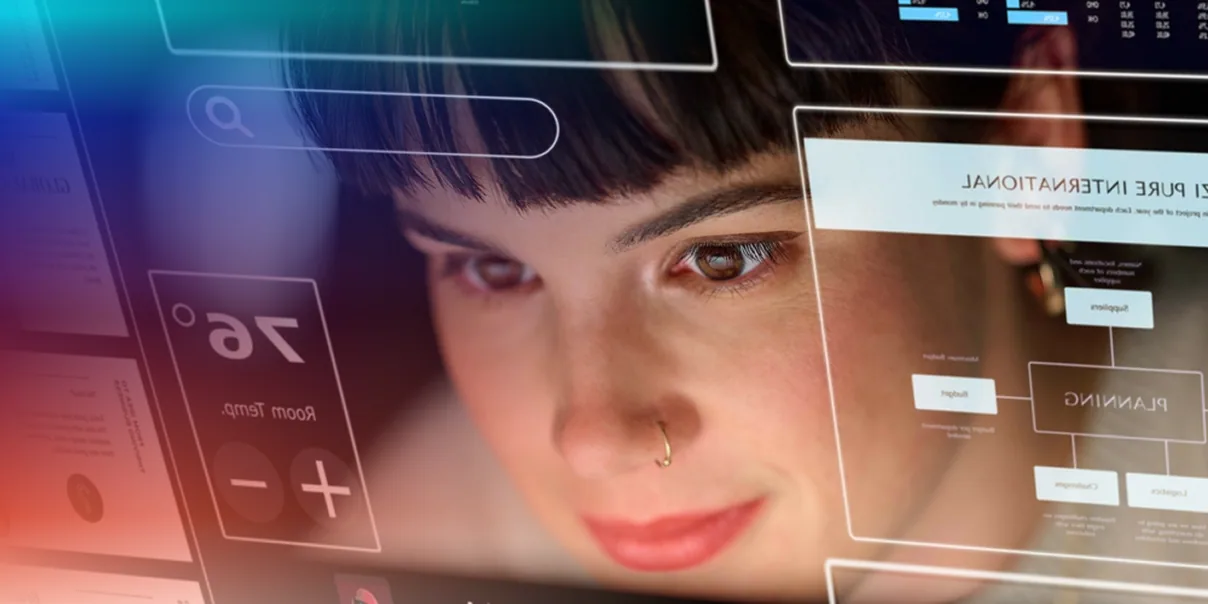
Why the future belongs to designers who think bigger than screens.
Artificial intelligence has fundamentally changed how digital products are built.
Features that once required weeks of engineering effort can now be prototyped in hours. Entire interfaces can be generated conversationally. Development cycles are accelerating at a pace the software industry has never experienced.
From the outside, it may appear that AI is replacing product designers.
The opposite is happening.
As technology makes building easier, deciding what should be built — and why — has become exponentially more valuable.
Code Is Becoming a Commodity
For decades, software development was constrained by implementation. Teams spent months translating ideas into technical requirements, requirements into code, and code into working products. Every new feature carried significant development cost, forcing organizations to prioritize only a handful of ideas.
AI changes that equation.
Today, implementation is becoming dramatically faster. Intelligent coding assistants can generate components, scaffold applications, refactor legacy code, and build functioning prototypes in a fraction of the time.
The bottleneck is no longer writing software. The bottleneck is making the right decisions.
This is a bigger shift than it first appears, because for thirty years the cost of building was the thing that imposed discipline on product teams. You couldn’t build everything, so you had to choose. The constraint did the prioritizing for you — badly and arbitrarily, but it did it.
Remove the constraint and the discipline has to come from somewhere else. It has to come from strategy. Organizations that never developed a real point of view about what matters are about to discover that they were relying on engineering scarcity to make their decisions, and that crutch is gone.
The Designer’s Role Is Expanding
Modern product designers are no longer simply creating screens.
They are shaping business strategy. They identify customer problems worth solving. They define product direction. They create systems instead of pages. They align technology with human behavior.
In an AI-driven world, these responsibilities become even more important because every organization now has the ability to build more — but not necessarily the wisdom to build better.
The companies that win won’t create the most features. They’ll create the right experiences.
There’s a version of this job that’s disappearing, and I don’t think we should mourn it. If your value was producing pixel-perfect comps of someone else’s decisions, that value is evaporating quickly — a model can do that now, competently, in seconds. If your value is knowing which decision to make and why, you’ve never been more necessary.
That’s not a comfortable transition for everyone. It requires moving upstream, toward ambiguity and business context and rooms where you have to defend a position. But it’s the only direction that’s actually durable.
Great Products Begin Long Before the Interface
The most important product decisions happen before a single pixel is designed.
Who are we solving for? What job is the customer trying to accomplish? What friction exists today? How does this product create measurable value? How should the experience evolve over time?
AI cannot answer these questions independently. These require empathy, observation, strategic thinking, and the ability to connect business objectives with human needs.
That’s the work of product design.
I lean hard on jobs-to-be-done thinking here, because features are a trap. Nobody wants your feature. They want to make progress on something they care about, and they’ll hire whatever gets them there. Once you genuinely understand the job — the real one, in context, with all its emotional and political weight — the feature decisions get dramatically easier and most roadmap arguments simply dissolve.
An AI can help you explore that space. It can generate hypotheses, summarize research, and pressure-test your framing. What it cannot do is sit across from a customer, notice the thing they didn’t say, and understand why it matters.
From Wireframes to Living Products
AI is transforming the design process itself.
Instead of creating static mockups that wait weeks for engineering implementation, product teams can now design directly into functioning software.
Ideas become interactive in hours. User testing happens earlier. Iteration becomes continuous. Feedback loops shrink dramatically.
This doesn’t eliminate design. It amplifies it. Designers can spend less time documenting interfaces and more time refining experiences.
The second-order effect is the one I find most interesting: it changes what you can honestly test. You cannot learn much by showing someone a picture of software and asking whether they like it. People are agreeable, and a static image asks them to imagine a product rather than use one. Put something real in their hands — something that responds, fails, and behaves — and you get behavior instead of opinions. Behavior is worth vastly more.
Design Systems Become Competitive Advantages
As AI accelerates production, consistency becomes increasingly valuable. Organizations that invest in thoughtful design systems gain a tremendous advantage.
Every component has purpose. Every interaction reinforces trust. Every experience feels connected.
AI becomes significantly more effective when it’s building from a mature design system rather than inventing interfaces from scratch. The result is faster delivery without sacrificing quality.
Think of the design system as the constraint that makes speed safe. Without one, generated output drifts — a slightly different button here, a novel spacing scale there — and the product slowly becomes a museum of everyone’s individual afternoons. With one, the system carries the decisions that were already made well, and the AI composes rather than invents.
This inverts the old economics of design systems. They used to be a hard sell: significant investment now, diffuse benefit later. When production is expensive, a system saves you some duplicated effort. When production is nearly free, the system becomes the only thing standing between you and infinite inconsistency. The faster you can build, the more the system is worth.
Brand Is More Than Visual Identity
In an AI world, every company has access to similar tools. The competitive advantage isn’t having AI. It’s having a point of view.
Your product should feel unmistakably yours. Brand lives in:
- The confidence of your interactions.
- The clarity of your content.
- The rhythm of your navigation.
- The consistency of your components.
- The emotional response your experience creates.
These are intentional design decisions — not outputs from a prompt.
There’s a homogenizing pressure in these tools that’s worth naming. A model trained on everything will, by default, give you the average of everything. That’s often useful and occasionally exactly what you want. But the average is not a strategy. If every team reaches for the same default, the entire category converges on the same competent, forgettable product — and the only companies that stand out will be the ones who deliberately chose not to.
The Rise of Vibe Coding
One of the most exciting developments in modern product development is the emergence of conversational programming, often called vibe coding.
Instead of translating every design into lengthy technical specifications, experienced product teams can collaborate directly with AI to rapidly explore ideas, build prototypes, and refine interfaces.
At Artifact Digital, we see vibe coding not as a replacement for engineering, but as an acceleration of creativity.
When paired with experienced designers, AI becomes a force multiplier. It allows ideas to move from strategy to working software at the speed of thought while preserving craftsmanship, accessibility, scalability, and brand integrity.
The honest caveat: a multiplier amplifies whatever you point it at. Pointed at a clear strategy and a mature system, it compounds quality. Pointed at a vague brief and no point of view, it produces a large volume of confident, plausible, mediocre work — and it produces it fast enough that nobody notices until there’s a lot of it.
Speed is not a strategy. It’s leverage. Leverage is only good news if you’re pushing in the right direction.
The Future Belongs to Integrated Teams
The highest-performing organizations won’t separate strategy, design, and development into isolated disciplines.
They’ll operate as integrated product teams where business strategy, customer insight, design excellence, engineering expertise, and AI-powered development reinforce one another.
This creates products that are:
- Better aligned with customer needs.
- Faster to market.
- Easier to evolve.
- More consistent.
- More valuable over time.
The handoff itself is the thing under threat here, and that’s overdue. Every handoff is a translation, every translation loses something, and the losses compound. When the same small group holds the problem from framing through shipping, nothing has to survive translation — because there’s no wall to translate across.
The Artifact Digital Perspective
We believe AI is ushering in one of the most exciting periods in the history of product development.
Not because machines are replacing creativity. But because they are removing the friction between imagination and execution.
Our approach combines strategic thinking, exceptional product design, and AI-powered development to help organizations create digital experiences that are intuitive, scalable, and unmistakably on brand.
The tools will continue to evolve. The models will become more capable. The code will become easier to generate.
What will always matter is understanding people.
Because in an AI world, the greatest competitive advantage isn’t the ability to build software. It’s the ability to design products worth building.
If that’s the kind of thinking you want on your product, we should talk.