
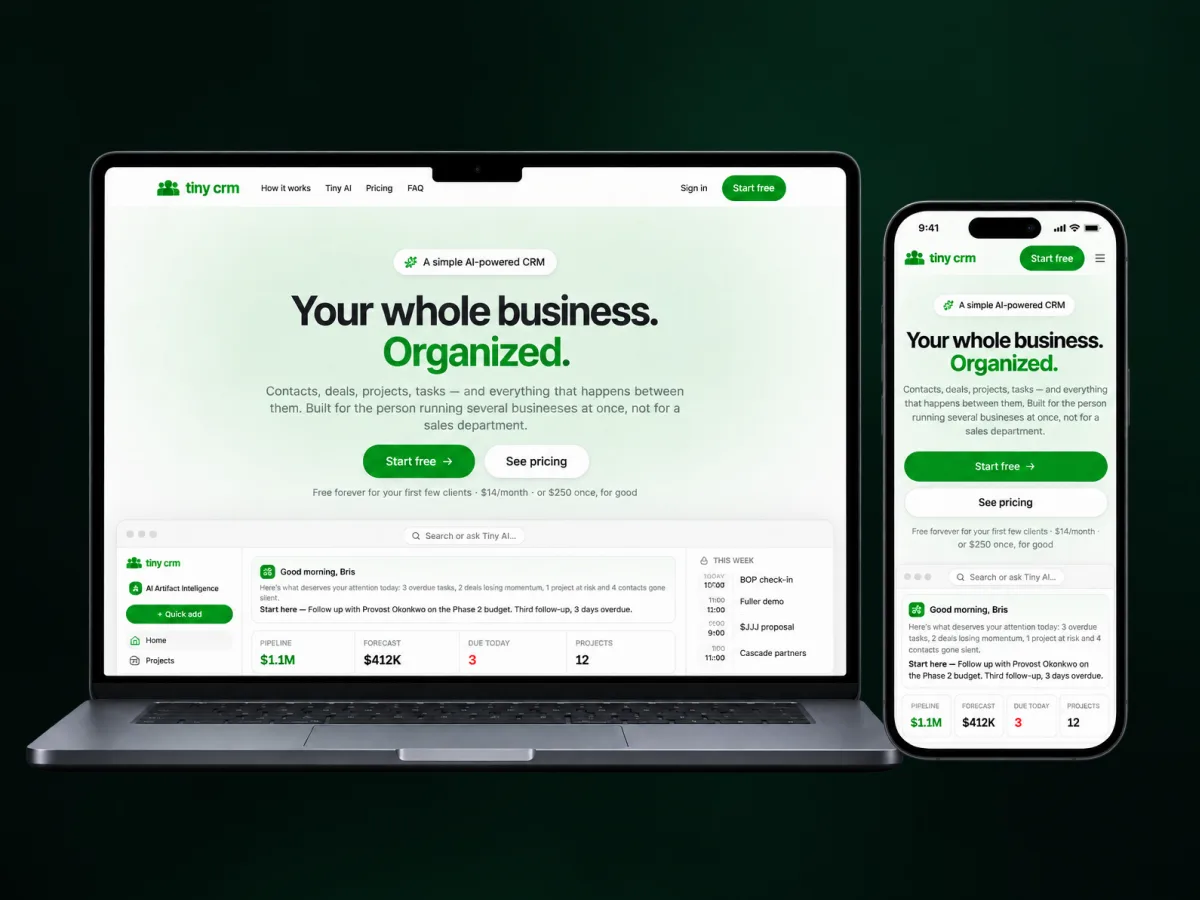
Tiny CRM
A CRM for people running the whole business, not a sales department — with the day's priorities on the first screen.
Customer portals, internal tools, dashboards, software products and AI tools. We work out what's actually worth building with you, then design and build it as one team.
Most app projects go wrong long before anyone writes code. A team builds everything they can think of, runs out of money before the part that mattered, and finds out too late that customers wanted something simpler.
So we start by separating the idea from the assumptions. What has to be true for this to work? What's the smallest version that proves it? What can wait until people are actually using it? You'll get straight answers, including when we think the answer is to build less, or nothing at all.
Then we build. Real screens early, working software soon after, and architecture that can grow without being rewritten the first time you succeed.
Off-the-shelf tools are built for the average company, so most businesses end up bending their process to fit them: the workaround everyone knows, the spreadsheet that quietly became critical, the subscription nobody can cancel.
When the thing you do differently is the reason customers choose you, generic software is a bad place to keep it. A custom app can hold your actual process, in your language, for your people — and you own it. Custom software and SaaS products goes deeper on when that's worth it, and when it isn't.
AI belongs in an app when it removes real work: summarizing, drafting, sorting, spotting what a person would miss. It doesn't belong there because it's expected, and a chatbot in the corner is rarely the answer.
We'll tell you which parts of your idea genuinely benefit from AI and which are better as ordinary, reliable software. Where it earns its place, we build it with the boring safeguards that keep it trustworthy.
The fastest possible build and the right build are not the same thing. We use AI heavily to move quickly, then spend the time we save on the parts that decide whether an app survives: the data model, permissions, payments, tests and the edge cases nobody demos.
You get working software, documentation that means something, and code your next engineer can pick up.
Every Artifact engagement runs on one method: Understand → Design → Build → Launch → Grow. These are the stages where Web App Development does the most work. See how we work.
The business case, the users, and what has to be true for the idea to work — before deciding what to build.
The flow, the screens and the first real version of the experience, compared against alternatives while changing course is cheap.
Production software: data model, integrations, permissions, payments and automated tests, by the team that designed it.
Deployment, monitoring, accessibility and performance checks, and a plan for the first real users.
What people do in the app decides the next release. We measure it instead of guessing.
A CRM for people running the whole business, not a sales department — with the day's priorities on the first screen.
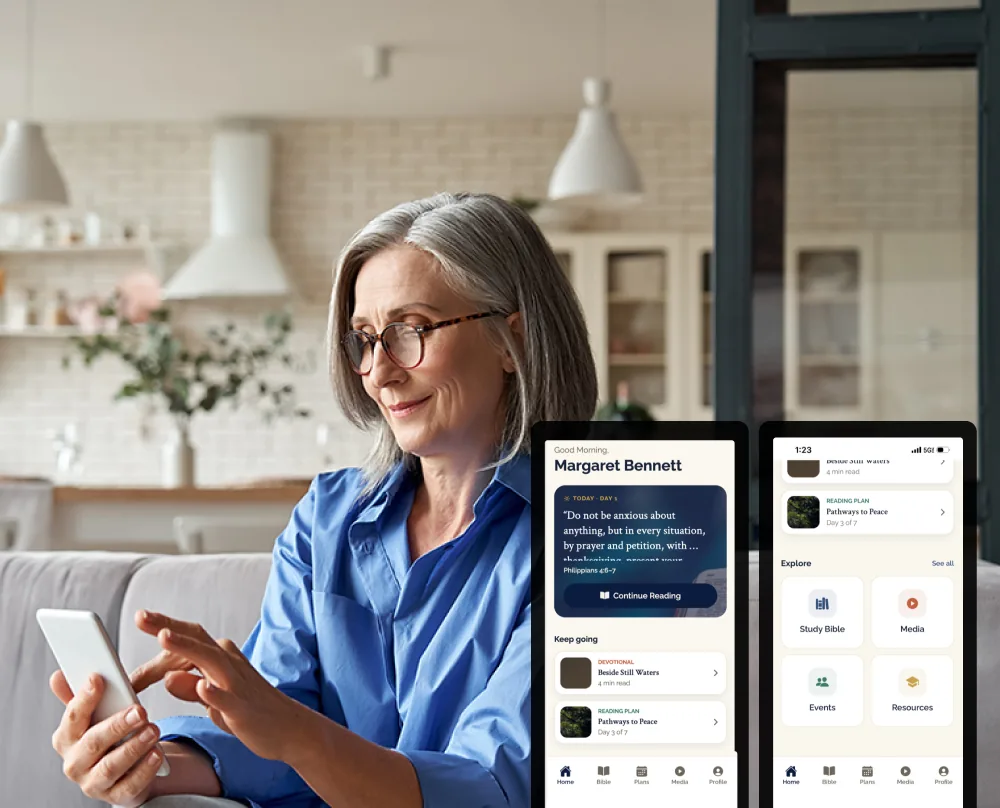
A Scripture-first daily formation app for senior-living residents, plus an admin portal that lets ministry staff run it without a developer.

An operating system for independent sellers running timed product drops — built zero to a live Stripe Connect marketplace in two weeks.
Tell us what you're trying to make possible. We'll help you work out what to build first, and what it would take to get it live.