
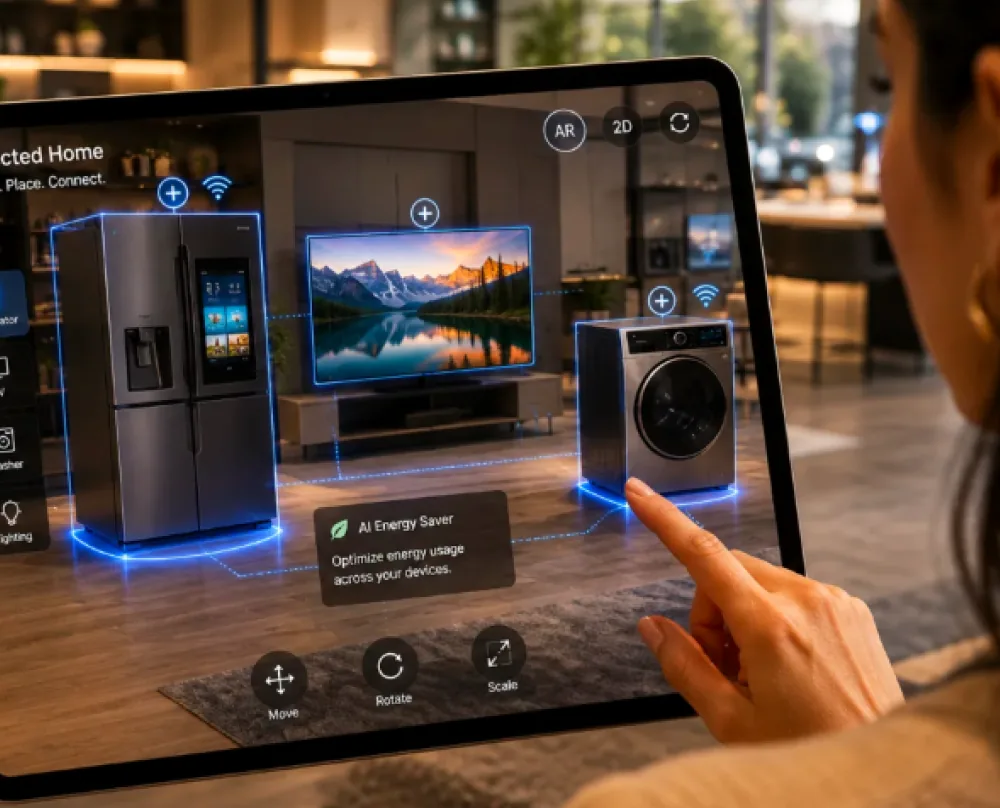
Major Electronics Company
An in-store AR experience showcasing the company's Connected Home products.
For decades, businesses bought software built for millions of companies and spent years bending it to fit one. AI changed the economics. Now software can be designed around the way you work — and you can own it.
Most companies don't run on one system. They run on a dozen — sales in one platform, finance in three, a spreadsheet that quietly became mission-critical, and a stack of integrations holding it all together. Every one of those tools was built for millions of other companies, and every one asks your business to conform to it. You pay for that compromise every year, per seat.
Bespoke SaaS is the alternative: software designed around your business, your people and your customers, with AI working inside it where it genuinely helps. Not a chatbot bolted into a corner — intelligence built into the workflows, decisions and processes your organization actually runs on.
This used to be realistic only for enterprises with very large budgets, because building custom software took large teams and long timelines. AI has changed that. Experienced people working with AI can now apply far more thinking, design, engineering and testing to a problem than team size alone allows — which means owning software built around your business can cost less than renting the compromise.
There's a financial story underneath the usual SaaS stack that rarely gets said plainly. When you assemble a business out of off-the-shelf platforms, you don't just accept their limitations — you rent them. The subscriptions renew whether or not the software still fits. The price rises whether or not you use the new features. And the day you stop paying, you lose access to the systems your business runs on, sometimes including your own data.
Bespoke software changes the ownership model. You invest in a digital property that's genuinely yours — an asset, not a recurring bill. It still deserves care and evolution, the way any living infrastructure does. But you stop paying rent on a compromise and start investing in something that grows in value as your business grows around it.
The most valuable AI rarely announces itself. It prepares, suggests, connects and organizes — quietly removing the operational drag that slows every team down. Where AI belongs in your software, we give it narrow, clear responsibilities: summarizing meetings, drafting responses, monitoring project health, flagging what needs attention.
Your people stay firmly in the role only people can hold: the decision-makers. The goal isn't fewer humans. It's giving experienced people more room to use their judgment.
Every company has its own vocabulary — terminology, product names, processes, acronyms, a brand personality. Generic AI doesn't know any of it. We ground the intelligence in your software in your documentation, your policies, your workflows and your tone, so when it communicates it sounds like your company, not like the model that generated it.
That consistency matters even when the audience is internal. It's the difference between a tool your team tolerates and one they trust.
An in-store AR experience showcasing the company's Connected Home products.

A leading online IT training and certification platform helping people build technology careers through certifications and guided learning pathways.
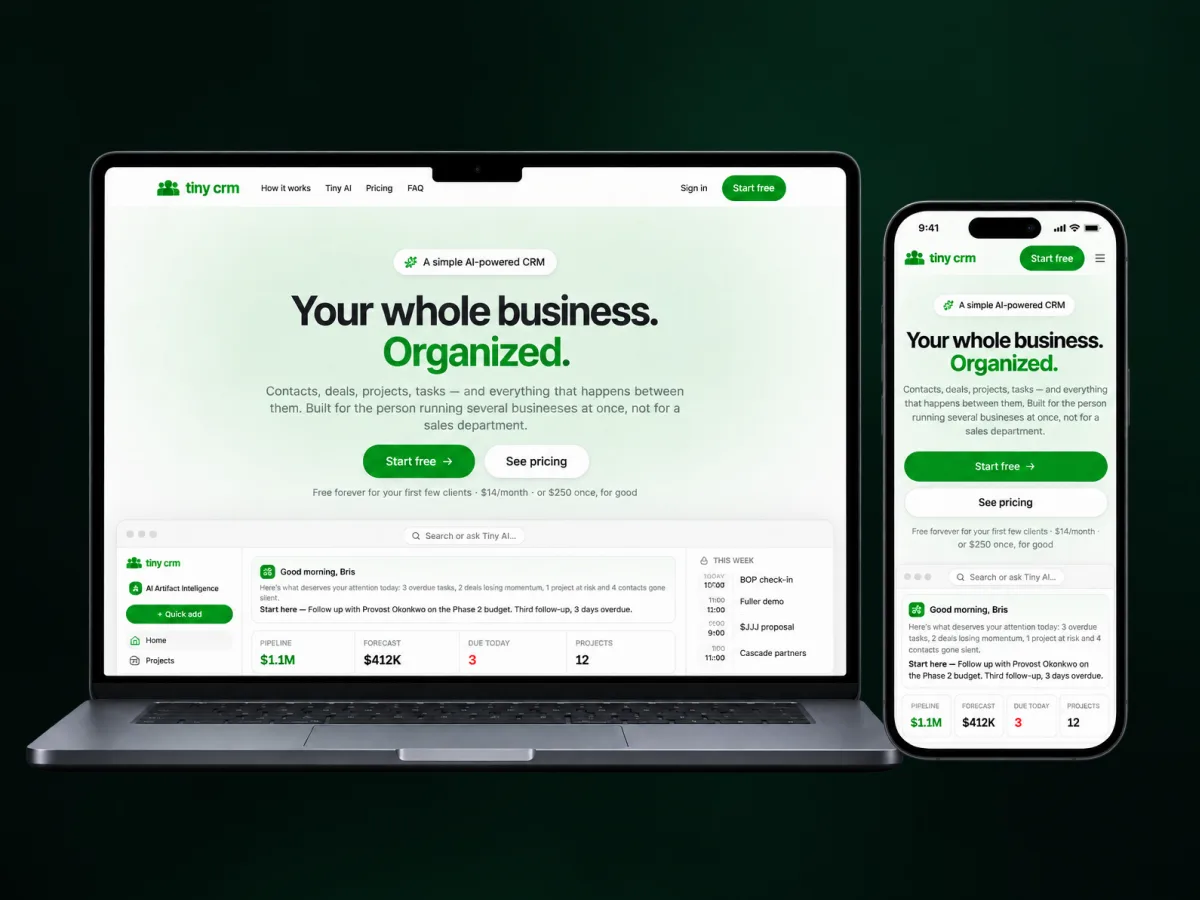
A CRM for people running the whole business, not a sales department — with the day's priorities on the first screen.
Tell us the problem. We'll tell you honestly whether software is the answer — and bring the strategy, design, engineering and AI to build it.