
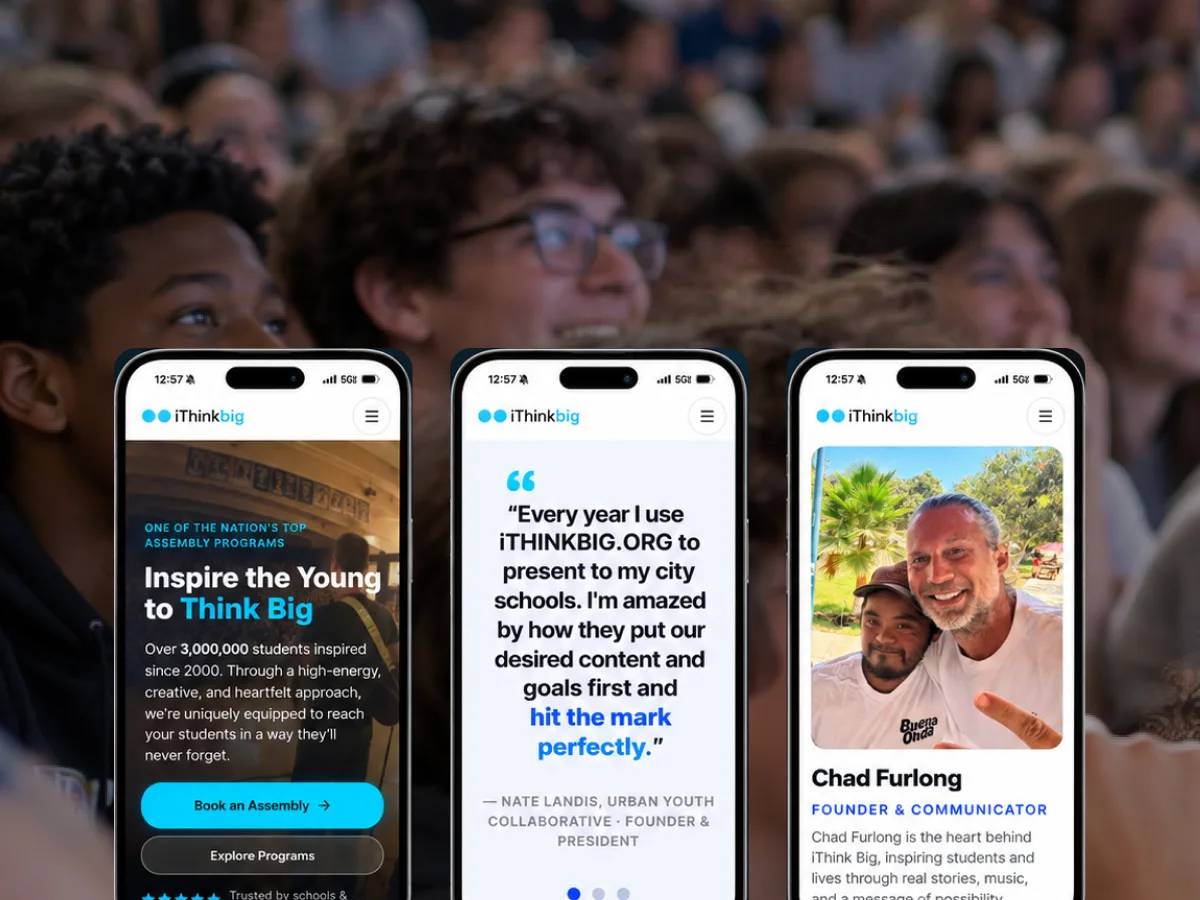
iThink Big
A live assembly program translated into a site that moves like the show and books like a business.
Every piece of bespoke software starts with how work actually happens. Research finds the workflow, the workaround and the decision the software has to support — and reduces the odds you build the wrong thing.
There's a version of UX research that produces beautiful reports nobody uses. The team runs a study because the process says to, presents a deck full of findings, everyone nods, and the product ships exactly as it would have anyway. That's not research. That's theater with a methodology.
Real research starts from a decision you're about to make and a risk you're trying to reduce. If a study can't change what you do next, we'd rather not run it. That single filter — will this change the decision? — cuts most research waste out of the room before it starts.
One conversation, done right, can be worth more than a survey of a thousand people. What matters isn't sample size for its own sake — it's whether you talked to the right person, watched them do the real work, and actually heard them.
Research isn't one thing. Understanding whether a concept resonates is a different question from whether people can complete a task, which is different again from how a workflow really unfolds on the floor. Each calls for a different method — generative interviews, usability testing, contextual inquiry, diary studies, a movement study in physical space.
We pick the method that fits the question and your constraints, not the one that's fashionable. Sometimes that's a rigorous protocol. Sometimes it's watching five people try to do the thing and taking honest notes. Rigor is about matching the method to the stakes, not about maximizing ceremony.
The hardest part of research isn't gathering insight — it's making it stick. Insight that lives in a researcher's head, or a PDF in a shared drive, doesn't change anything. So we design the output for how your team actually works: the two or three findings that matter, framed as decisions, with the evidence attached.
We're also careful to separate what we observed from what we're recommending. You deserve to see the raw signal and judge it yourself, not just inherit our conclusions. That's how research builds trust instead of just winning arguments.
Every Artifact engagement runs on one method: Understand → Design → Build → Launch → Grow. These are the stages where UX Research does the most work. See how we work.
Interviews and observation show how work actually happens — the workarounds, the handoffs, and the decisions the software will have to support.
We put rough, working software in front of the right people early, while their reactions can still change the direction cheaply.
Usability testing and behavioral data explain what analytics can't: why people stall, where trust breaks, and what they expected instead.
A live assembly program translated into a site that moves like the show and books like a business.
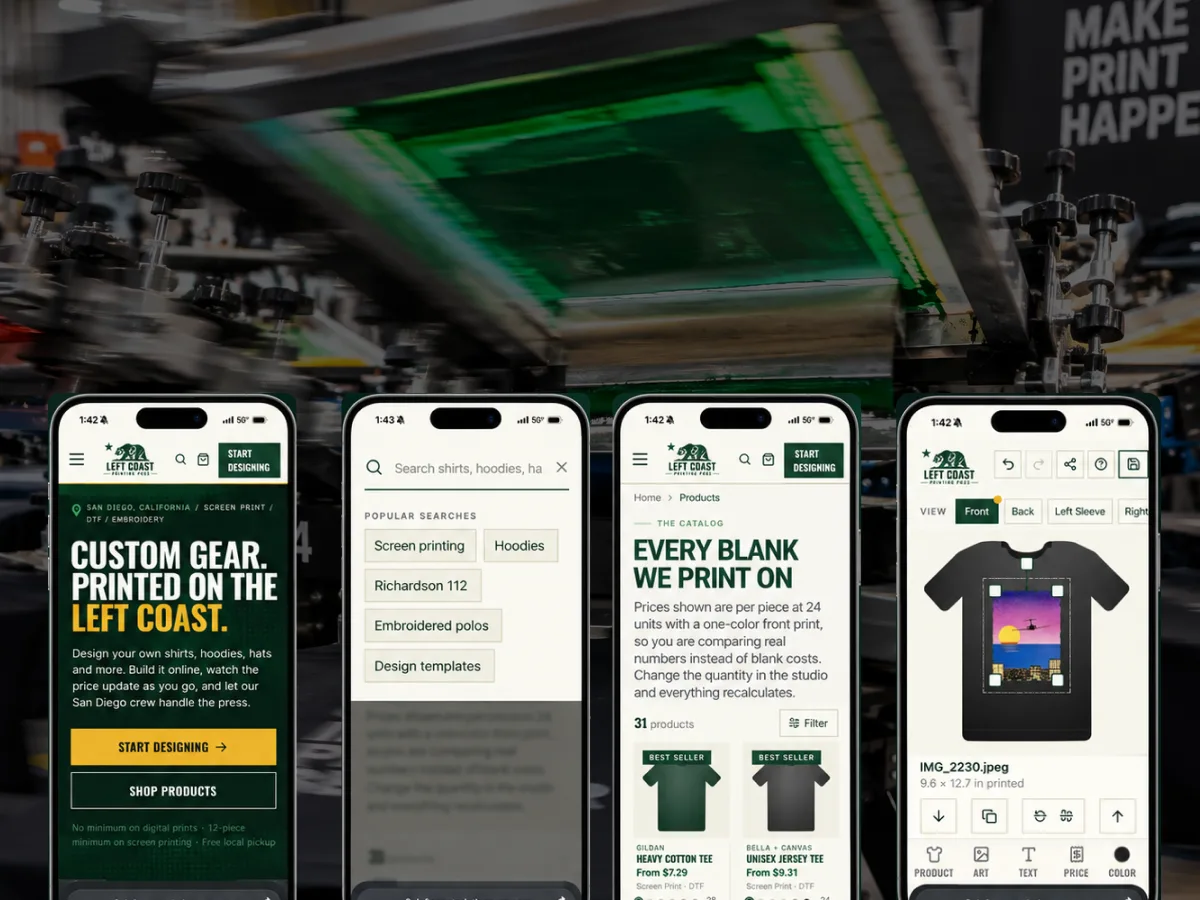
A print shop site where customers place their own artwork on the garment — and the order arrives ready to produce.

A leading online IT training and certification platform helping people build technology careers through certifications and guided learning pathways.
Tell us the problem. We'll tell you honestly whether software is the answer — and bring the strategy, design, engineering and AI to build it.