
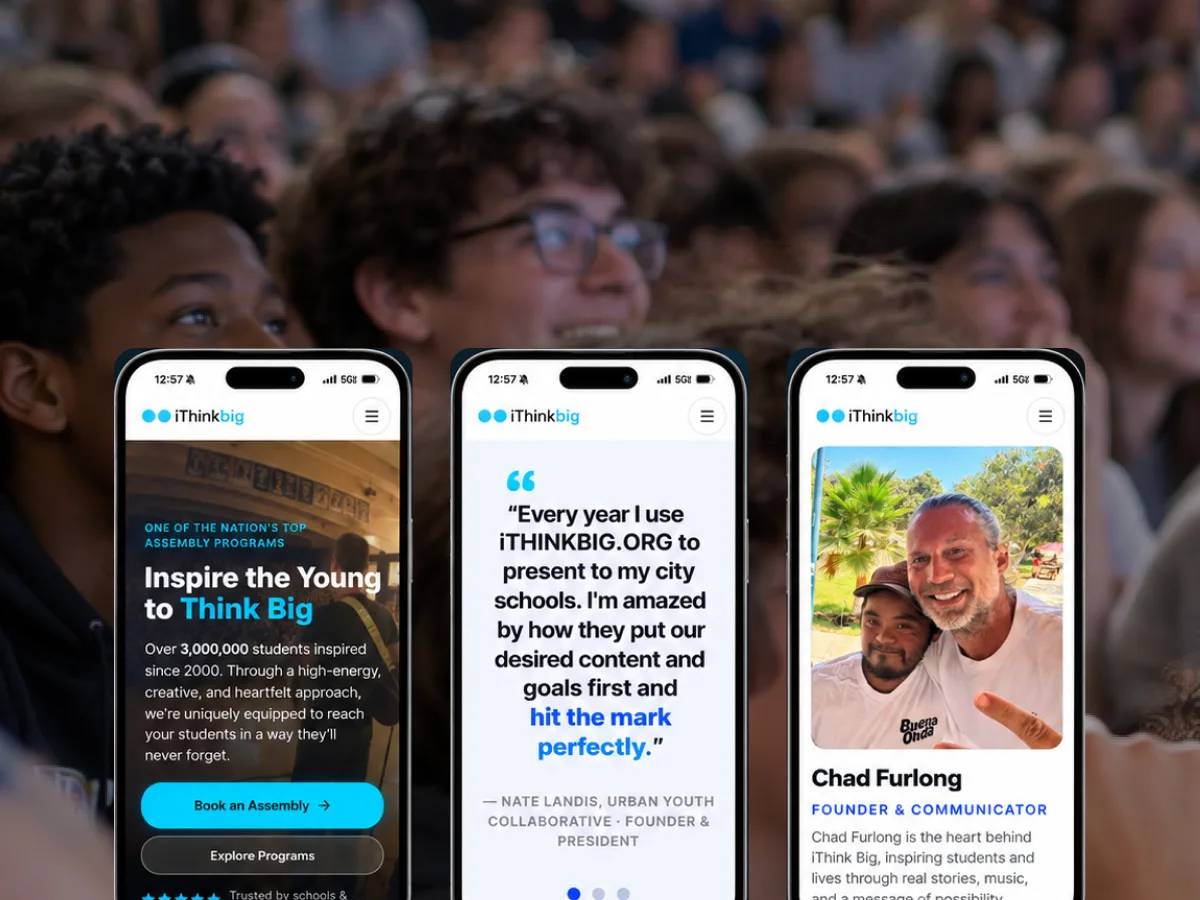
iThink Big
A live assembly program translated into a site that moves like the show and books like a business.
Strategy is how we identify where purpose-built software can create meaningful business leverage — the workflow, the knowledge, the customer experience or the product opportunity worth building for — and turn it into choices a team can act on.
Digital strategy is one of the most abused phrases in our industry. It gets used to describe everything from a marketing campaign to a technology roadmap to a vague sense that a company should "do more online." So let's be precise about what we mean.
Strategy is a set of choices about where you'll compete and how you'll win — and, just as importantly, what you won't do. For us, those choices lead somewhere concrete: the software and experiences your customers, employees and partners actually use. Strategy is the connective tissue between a business goal and the thing someone taps.
When strategy is missing, you can feel it. Teams argue about features instead of outcomes. Every stakeholder gets their box on the homepage. The roadmap is a list of everyone's wishes, ranked by who complained loudest. The work is rarely to invent something new — it's to make the hard choices the organization has been avoiding.
It's tempting to open a strategy engagement by auditing the website or the product. We don't start there. We start with the P&L, the growth targets, and the friction the leadership team feels but hasn't named yet. If we don't understand how the business makes money and where it's trying to go, any recommendation we make about design or technology is just taste.
So the first conversations are about outcomes. What has to be true in eighteen months? Where is revenue leaking? Where is expertise trapped in spreadsheets and inboxes? Which customer segments matter most, and which ones are quietly subsidizing the rest? Only once we understand the shape of the business do we look at software — and then the opportunities tend to announce themselves.
Most companies already have a brand — a reputation, a voice, a way customers think about them. The job isn't to reinvent that. It's to carry it into the software and experiences you build next, so they feel unmistakably like you and clearly better than the alternative.
Our history in brand and agency work matters here. We translate that equity into concrete direction: how the product is positioned, the story it tells, the priorities it holds, and the experience it delivers. That direction becomes the brief every design and engineering decision is measured against.
For most modern companies, the experience is the strategy. Your customers don't experience your org chart or your tech stack. They experience the thing in front of them — how quickly they found what they needed, whether it felt trustworthy, whether it respected their time. That experience is where strategy either becomes real or falls apart.
This is why we refuse to separate strategy from design and build into tidy phases handed between different teams. A strategy that can't be designed is a fantasy. A design that ignores the business is decoration. We keep them in the same room, held by the same senior people, because that's where good decisions actually get made.
Almost every organization we work with has more ideas than capacity. The value of a strategy isn't the ideas — it's the sequence. What do you do first, what do you deliberately defer, and what do you kill? A good roadmap makes tradeoffs visible so leadership can make them on purpose instead of by accident.
We're opinionated here. We'll tell you when a beloved initiative isn't worth the effort — including when the right answer is off-the-shelf software rather than something custom — and we'll show our reasoning. You don't need a partner who agrees with you. You need one who's spent enough time in the arena to know which battles are worth fighting.
Every Artifact engagement runs on one method: Understand → Design → Build → Launch → Grow. These are the stages where Digital & Product Strategy does the most work. See how we work.
We find where software can create real leverage — the workflow that costs the most, the knowledge nobody's tools use, the product no one has built yet — and what has to be true for it to pay off.
Strategy gets tested as working software, not defended in a deck. Early prototypes show whether the opportunity holds up before a major budget is committed.
We tie what the software should achieve to measures leadership already cares about, and read real usage against them.
The roadmap stays a set of deliberate choices — what's next, what waits, what stops — as the business and the software change.
A live assembly program translated into a site that moves like the show and books like a business.
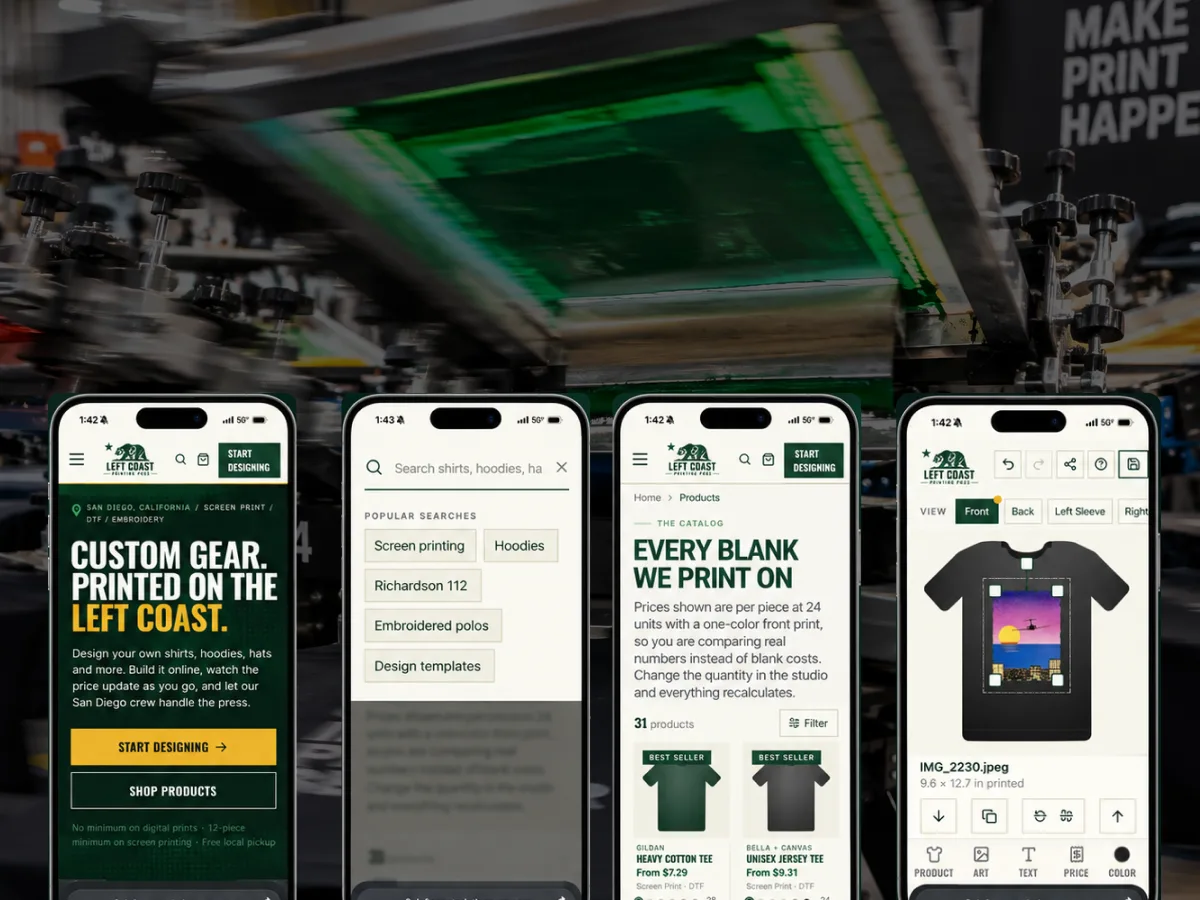
A print shop site where customers place their own artwork on the garment — and the order arrives ready to produce.

A leading online IT training and certification platform helping people build technology careers through certifications and guided learning pathways.
Tell us the problem. We'll tell you honestly whether software is the answer — and bring the strategy, design, engineering and AI to build it.