
Days of manual work
Screenshotting competitors, hand-building spreadsheets, assembling decks. Every engagement rebuilds the same deliverable from scratch.
Artifact’s own product · Pre-launch
Case study · AI SaaSBenchBot audits a website against its real competitors — UX, accessibility, content, conversion and AI visibility — and turns what it finds into client-ready reports, prioritized tasks, and progress tracked over time. We built it for ourselves, because we were tired of the alternative.
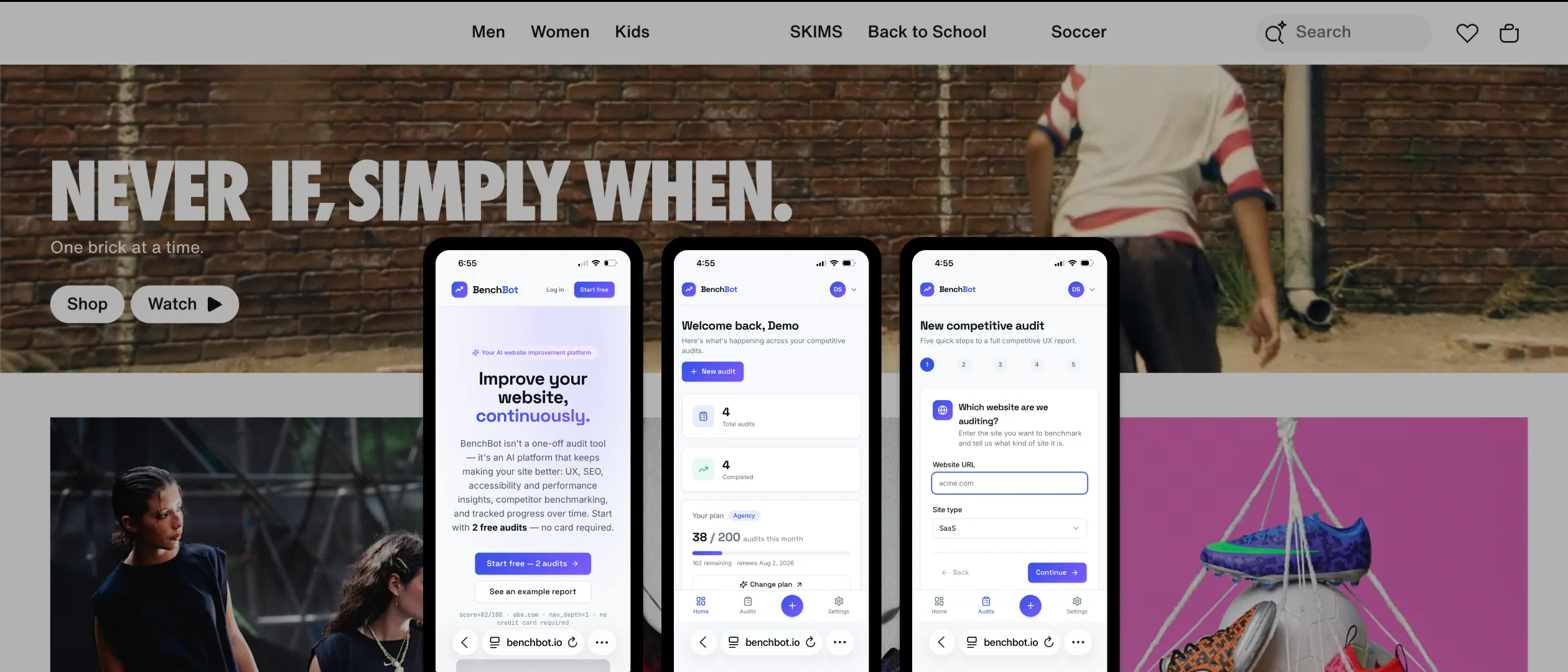
BenchBot on mobile: the landing page, a demo account’s dashboard, and the first step of a new competitive audit.
Screenshotting competitors, hand-building spreadsheets, assembling decks. Every engagement rebuilds the same deliverable from scratch.
The output is a PDF that's out of date the week it ships. Nothing tracks whether anything actually improved.
Findings arrive as a list of problems rather than prioritized tasks with effort and impact attached. So they don't get done.
The audit isn’t the product — it’s the entry point. A one-off report is bought once and filed; continuous improvement, tracked over time, is something you keep. That reframe turned a website audit tool into an AI website improvement platform, and the free tier follows from it: two complete audits, not a crippled trial.
Underneath is a full pipeline — crawl the site, capture real desktop and mobile screenshots with Playwright, run structured AI analysis, assemble a branded report and deck. Competitive audits seed a real-time collaborative canvas, so findings become something a team works on rather than something they read.
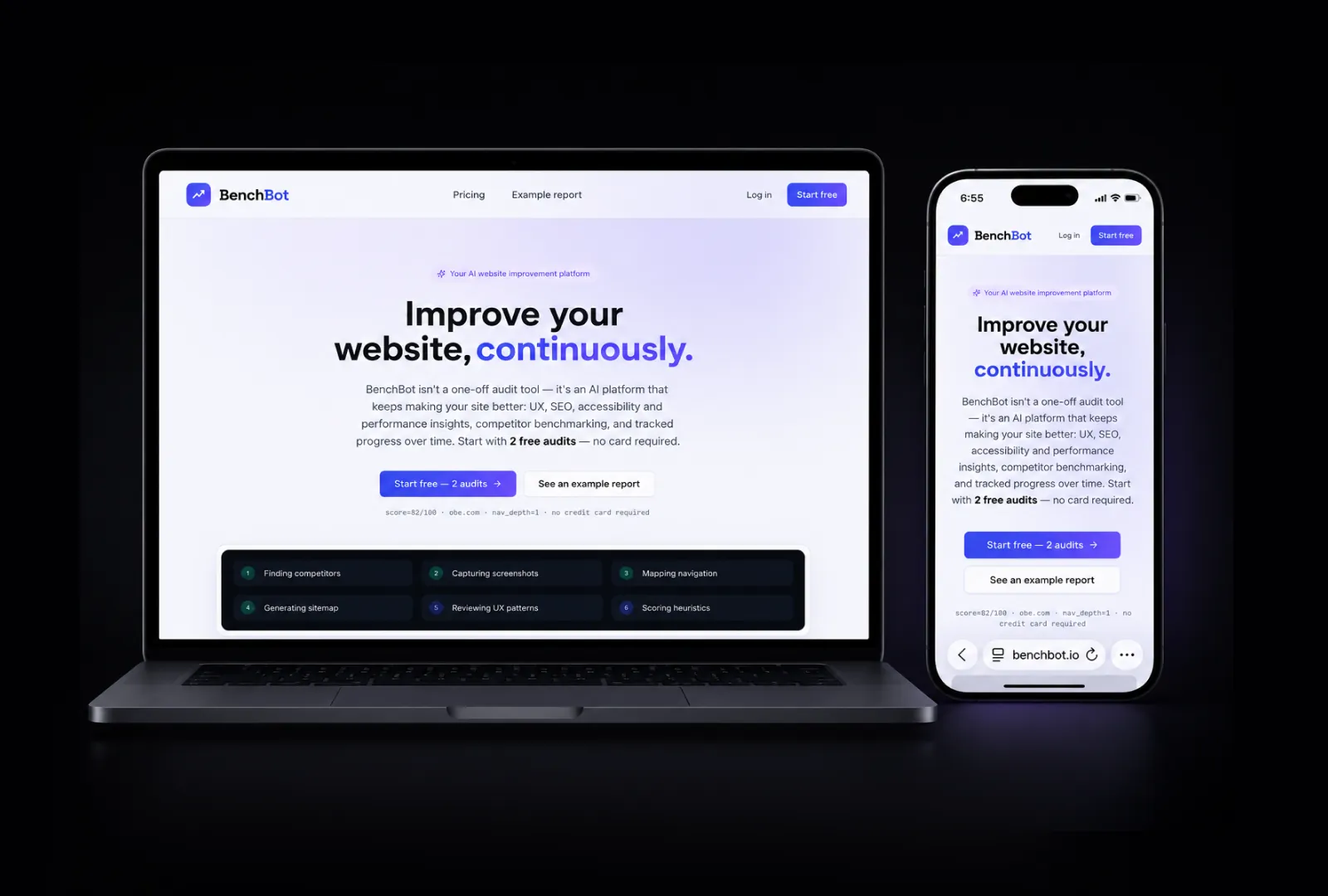
Crawl, real screenshots, AI analysis, report and deck — measured, for a small competitor set.
Live web-search discovery returns genuine rivals: Stripe → Adyen, Square, PayPal. Notion → Trello, Asana, Todoist.
Run against live sites: stripe.com scored 62/100 with 28 unnamed icon-buttons; github.com scored 87/100.
A 10-slide branded deck plus PDF, and a Miro-style canvas seeded from the audit.