
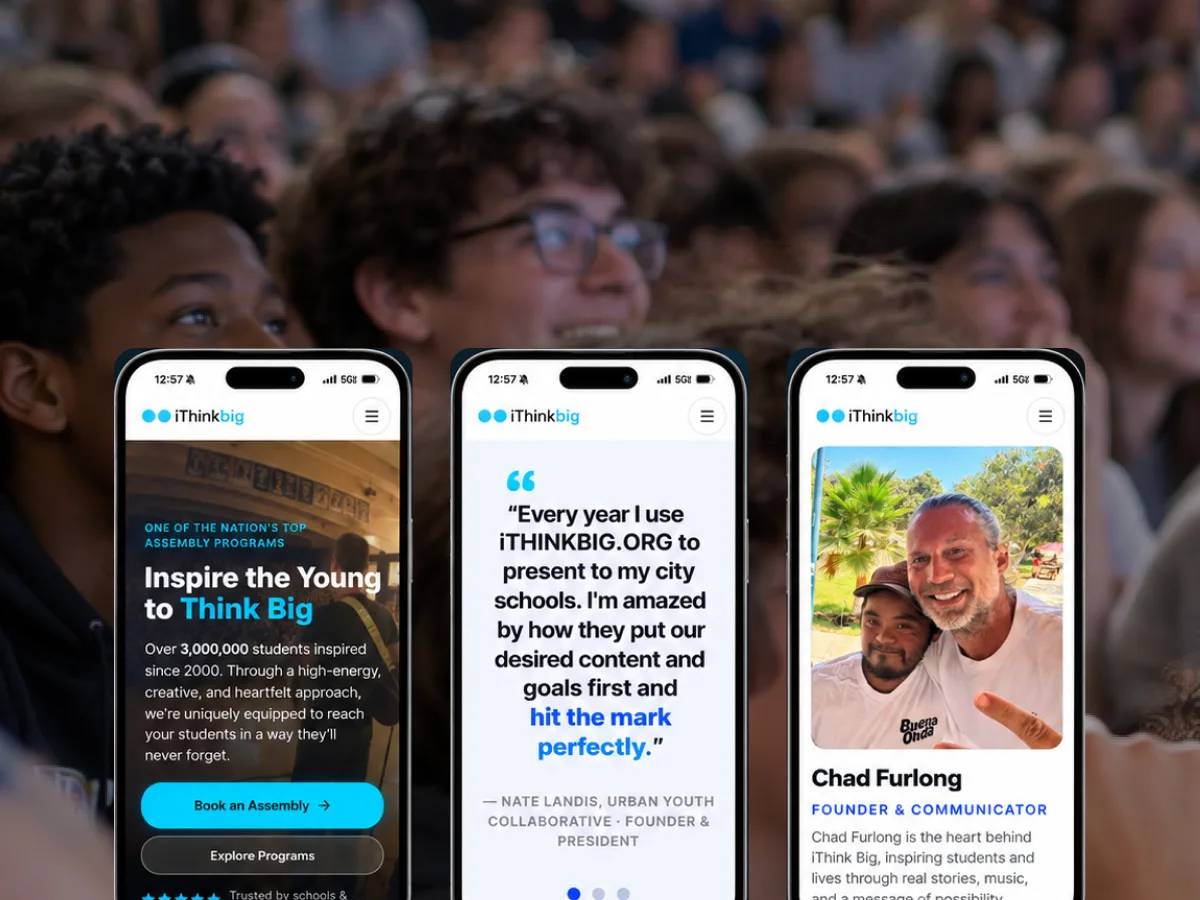
iThink Big
A live assembly program translated into a site that moves like the show and books like a business.
UX strategy decides what experience the software should create and why — which users it serves, which jobs it does for them, and the priorities that keep hundreds of later decisions consistent.
People conflate UX strategy with UX design, and the two are not the same. Design is how the experience looks and behaves. Strategy is the argument for why that experience should exist in the first place — which users it serves, which jobs it does for them, and how doing those jobs well moves the business.
You can spot software built without UX strategy from a mile away. It has a settings screen with forty toggles because no one would decide on defaults. It has five ways to do the same thing and no clear way to do the important thing. Every feature was somebody's good idea, and none of them add up to a point of view. UX strategy is what supplies the point of view.
Our job is to give the experience a spine — a small set of principles and priorities clear enough that hundreds of downstream decisions can be made consistently, by different people, without a meeting for each one.
We lean heavily on jobs-to-be-done thinking, because features are a trap. Customers don't want a feature; they hire your software to make progress on something they care about. When you understand the job — the real one, in the customer's context, with all its emotional and social weight — the feature decisions get dramatically easier.
So we map the jobs your software is being hired for, rank them honestly, and use that ranking as the tiebreaker for everything downstream. It's remarkable how many roadmap arguments simply dissolve once everyone agrees on which job matters most.
A UX strategy that lives in a hundred-page document is useless, because no one reads it and no one can act on it under pressure. The strategies that actually change how a team works are short enough to remember: a handful of principles, a clear priority order, a few things you've explicitly decided not to do.
We write for the moment of decision — when a designer, engineer, or product manager is staring at a tradeoff at 4pm and needs to know which way to lean. If the strategy doesn't help in that moment, it isn't strategy, it's paperwork.
Every Artifact engagement runs on one method: Understand → Design → Build → Launch → Grow. These are the stages where UX Strategy does the most work. See how we work.
We map the jobs people hire the software to do and rank them, so the product has a clear priority order before anything is designed.
Principles get pressure-tested against real scenarios in working prototypes, not just argued in workshops.
Decision rules and priorities keep the software coherent as new features arrive and new people start making decisions.
A live assembly program translated into a site that moves like the show and books like a business.
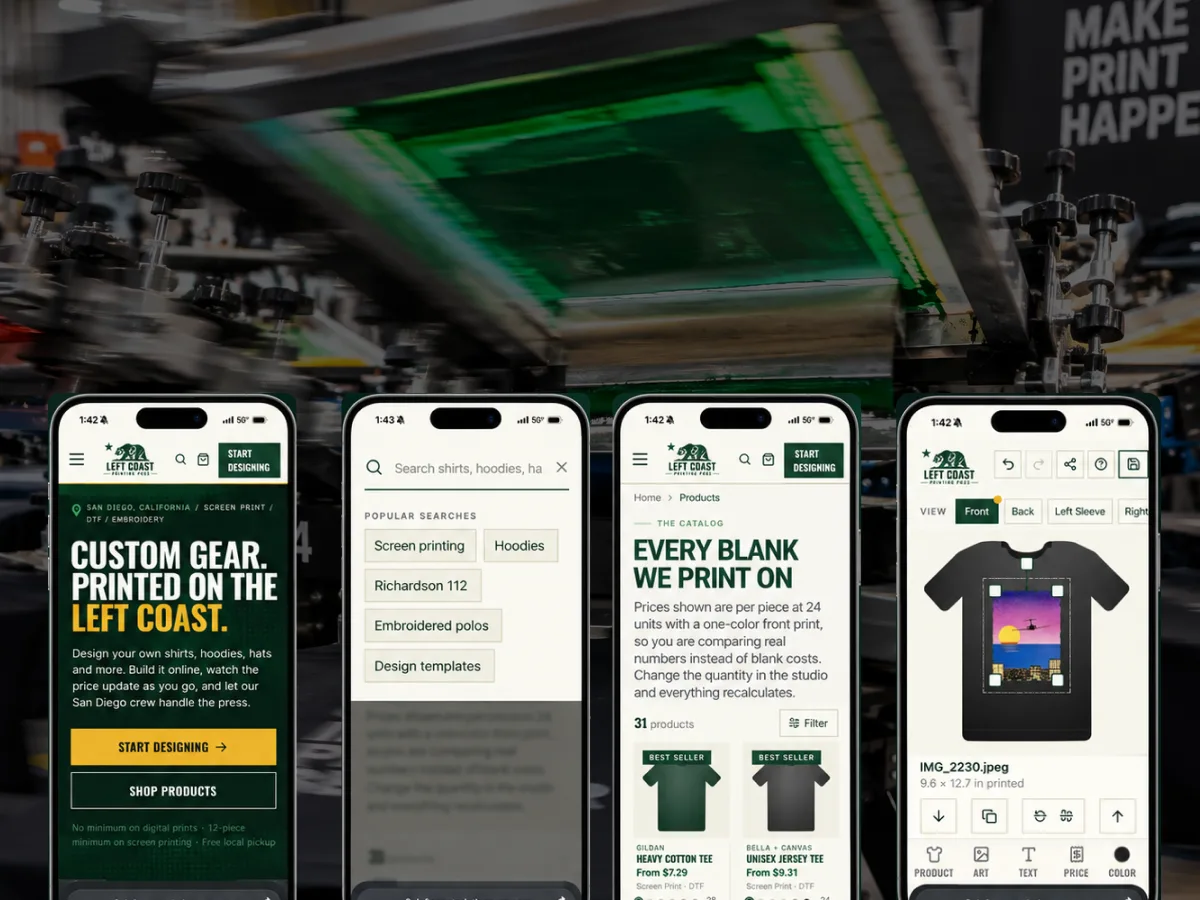
A print shop site where customers place their own artwork on the garment — and the order arrives ready to produce.

A leading online IT training and certification platform helping people build technology careers through certifications and guided learning pathways.
Tell us the problem. We'll tell you honestly whether software is the answer — and bring the strategy, design, engineering and AI to build it.