

iThink Big
A live assembly program translated into a site that moves like the show and books like a business.
Sometimes you don't need new software. You need an honest, expert read on what's wrong with what you have, why it's costing you, and what to fix first — before deciding whether to fix it, extend it or replace it.
Most organizations know something is off with their software or digital experience. Conversion is soft, support tickets cluster around the same screens, the sales team keeps apologizing for the demo, staff have built spreadsheets to work around the system. What they don't have is a clear, unsentimental account of what's wrong and what to do about it — ranked by what actually moves the needle.
That's what an audit is for. It's a diagnosis, not a redesign. Before you spend real money treating the problem, it's worth knowing precisely what the problem is — because the obvious symptom and the actual cause are frequently in different places. The checkout isn't converting, but the real issue is a trust gap three screens earlier.
The value of an outside audit is partly expertise and partly distance. We've seen a lot of software, so patterns jump out that are invisible from the inside. And because we're not defending decisions we made, we can say the things your team already suspects but can't get heard.
An audit is only as good as what it's grounded in. So we triangulate: heuristic evaluation against established usability and accessibility principles, your own analytics and behavioral data, and — where it matters — real user observation. Expert judgment is fast and catches a lot, but it's strongest when it's checked against what people actually do.
We're careful to separate what we observed from what we recommend, and to show our reasoning. You should be able to see the evidence and judge it yourself, not just take our word for it. That's how an audit earns the trust it needs to actually change what happens next.
It's easy to produce a list of two hundred problems. That's not useful — it's overwhelming, and it lets everyone quietly ignore all of it. The hard, valuable work is ranking: which handful of issues are actually costing you the most, and which fixes give you the most return for the least effort?
So every audit we deliver is prioritized by impact and effort, with a clear recommendation on where to start. And if the honest answer is that you don't need new software — just a few targeted fixes — we'll tell you that, even though it's less work for us.
Every Artifact engagement runs on one method: Understand → Design → Build → Launch → Grow. These are the stages where Experience Audits does the most work. See how we work.
An audit is often where the method starts: an evidence-based read on existing software before deciding what to fix, extend or replace.
After launch, the same approach measures whether the software is doing its job and ranks what to improve next.
A live assembly program translated into a site that moves like the show and books like a business.
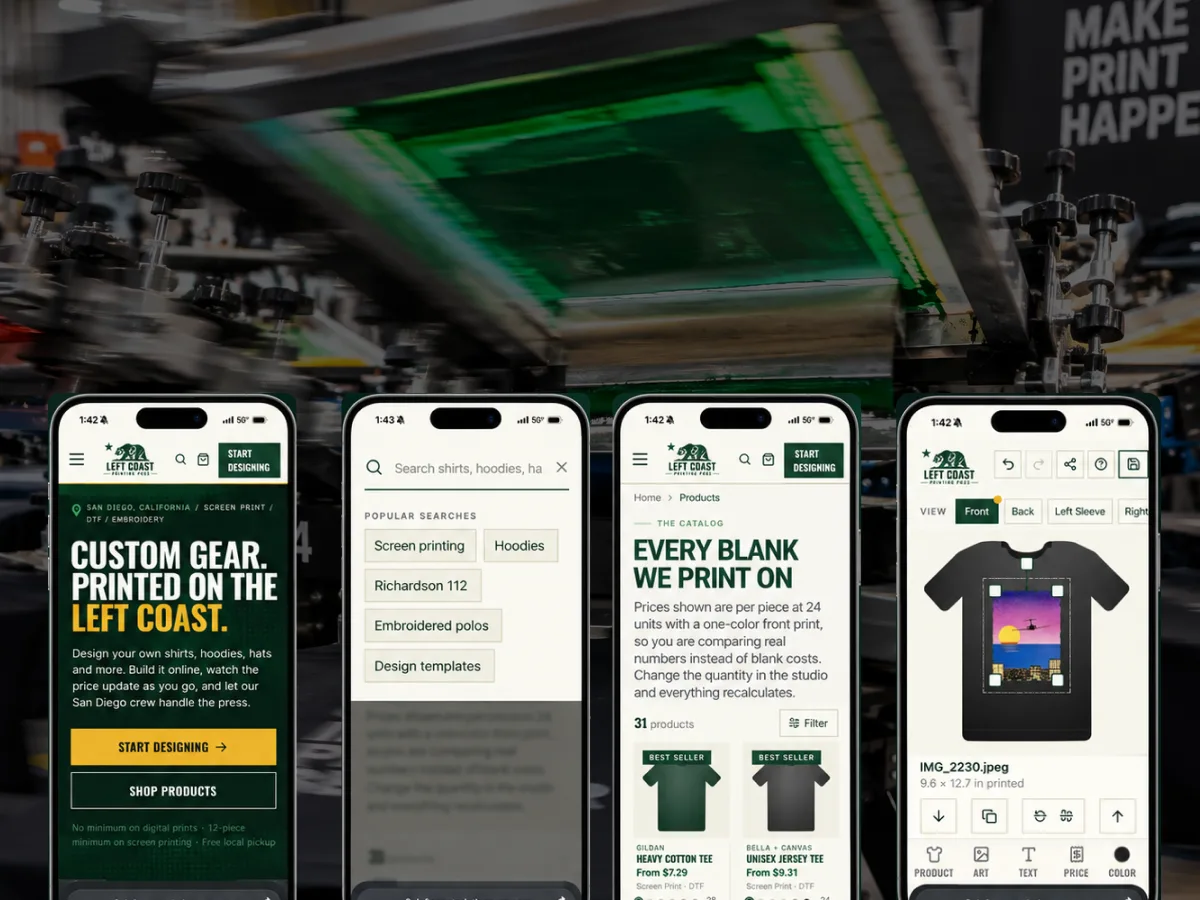
A print shop site where customers place their own artwork on the garment — and the order arrives ready to produce.

A leading online IT training and certification platform helping people build technology careers through certifications and guided learning pathways.
Tell us the problem. We'll tell you honestly whether software is the answer — and bring the strategy, design, engineering and AI to build it.