
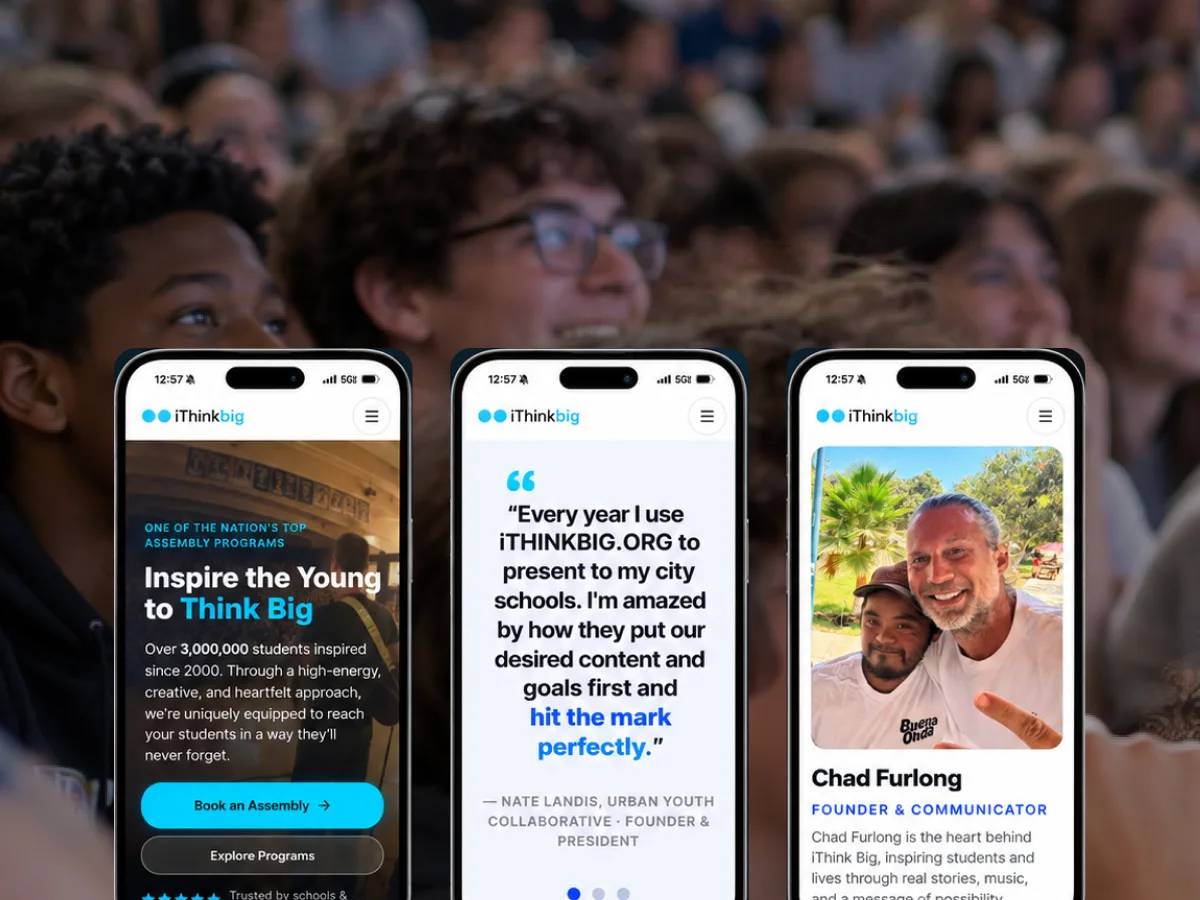
iThink Big
A live assembly program translated into a site that moves like the show and books like a business.
Content platforms are part of the software ecosystem a business runs on. They rarely fail because of the technology — they fail because the content model was an afterthought and the people who'd use the system daily were never in the room. We design for both.
Enterprise content management is where a lot of ambitious digital strategies quietly go to die. A company picks a powerful platform — Optimizely, Sitecore, a composable stack — expecting it to solve their content problems. Eighteen months and a very large invoice later, the site is just as hard to update as before, editors have built a shadow system of workarounds, and everyone blames the software.
The software is almost never the real problem. The real problem is that the content model — the underlying structure of how content is defined, related, and reused — was treated as a technical detail instead of the foundation it is. Get the model right and a good CMS feels like leverage. Get it wrong and even the best platform becomes a very expensive way to publish a webpage.
Our founder led the large, painful version of this work in director roles at previous agencies, before founding Artifact: consolidating a sprawling six-thousand-page ecosystem down to a focused platform, and unifying content operations across a dozen-plus business units on six continents. The lesson from every one of those engagements is the same. Model the content around how the business actually works, involve the people who'll live in the system, and the technology takes care of itself.
Before we talk about any platform, we model the content. What are the real content types? How do they relate? What gets reused where, and what should never be copied and pasted? A good content model mirrors the structure of your business and your audience's needs — not the shape of last decade's website.
This is unglamorous work, and it's the single highest-leverage thing you can do on a CMS project. A clean model makes everything downstream easier: authoring, localization, personalization, integration with the product and data systems around it, migration, the next redesign. A muddy one taxes every future project forever.
Our team works across the enterprise landscape — Optimizely and Sitecore among the traditional DXPs, and the composable, headless, and hybrid architectures more organizations are moving toward. Each has real strengths and real costs, and the honest answer to 'which should we use' is 'it depends on your team, your content, and your roadmap.'
We'll help you make that choice with clear eyes, including the parts vendors gloss over: the operational burden, the total cost past year one, the skills your team needs to actually run it. And if you've already chosen — or inherited — a platform, we make it work as well as it possibly can rather than relitigating the decision.
The users of a CMS aren't your customers — they're your content team, your marketers, your regional editors. If the system fights them, they'll route around it, and the beautiful governance model on the whiteboard evaporates. So we design the authoring experience as carefully as the public-facing one.
That means sensible components, guardrails that prevent mistakes without smothering flexibility, and localization and workflow that match how your teams are actually structured. The goal is a platform people reach for, not one they resent.
Every Artifact engagement runs on one method: Understand → Design → Build → Launch → Grow. These are the stages where Enterprise CMS does the most work. See how we work.
We audit content and operations, then model the content around how the business and its audiences actually work.
Implementation on the platform that fits your team, integrated with the systems around it, with a migration that consolidates instead of copying the old mess.
An authoring experience and governance designed so the people who run the platform every day can do it well without us.
A live assembly program translated into a site that moves like the show and books like a business.
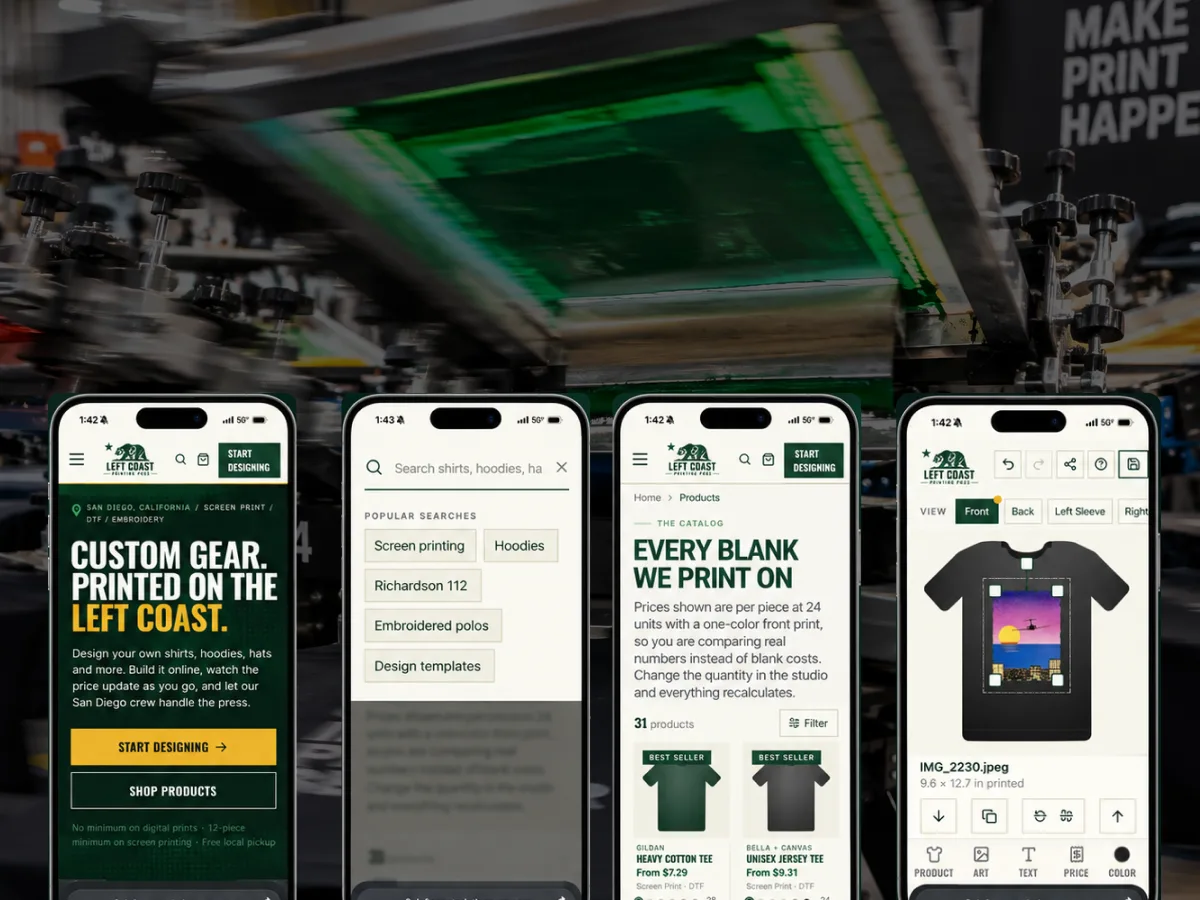
A print shop site where customers place their own artwork on the garment — and the order arrives ready to produce.

A leading online IT training and certification platform helping people build technology careers through certifications and guided learning pathways.
Tell us the problem. We'll tell you honestly whether software is the answer — and bring the strategy, design, engineering and AI to build it.